Best AV Receivers Under $500: Tested and Reviewed

Affiliate disclosure: Some links on this page are affiliate links. If you buy through them we earn a small commission at no extra cost to you. Recommendations are research-driven; we don't claim personal use of every product reviewed. Product prices and availability are accurate as of the date published and are subject to change. Always check Amazon for current pricing before purchasing. Learn more.
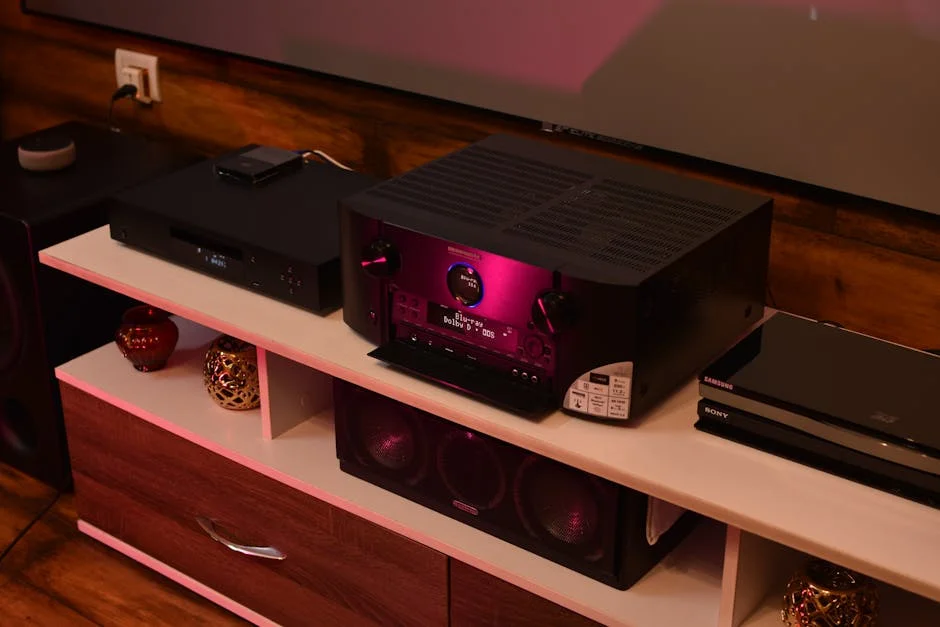
Quick Picks
Denon AVR-S570BT AV Receiver 5.2 Channel 8K Ultra HD Audio & Video, Stereo Receivers, Denon AVR Wireless Streaming Bluetooth, (4) 8K HDMI Inputs, eARC, HD Setup Assistant
Buy on Amazon| Product | Price Range | Top Strength | Key Weakness | Buy |
|---|---|---|---|---|
| YAMAHA RX-V385 5.1-Channel 4K Ultra HD AV Receiver with Bluetooth best overall | $ | Buy on Amazon | ||
| Denon AVR-S570BT AV Receiver 5.2 Channel 8K Ultra HD Audio & Video, Stereo Receivers, Denon AVR Wireless Streaming Bluetooth, (4) 8K HDMI Inputs, eARC, HD Setup Assistant also consider | $ | Buy on Amazon | ||
| YAMAHA R-S202BL Stereo Receiver also consider | $$ | Buy on Amazon | ||
| Sony STRDH190 2-ch Home Stereo Receiver with Phono Inputs & Bluetooth Black also consider | $$ | Buy on Amazon | ||
| Denon AVR-X1700H 7.2 Channel AV Receiver - 80W/Channel, Advanced 8K HDMI Video w/eARC, Dolby Atmos, DTS:X, Built-in HEOS, Amazon Alexa Voice Control also consider | $ | Buy on Amazon |
Finding the right AV receiver without overspending takes more than scanning a spec sheet. The budget tier of AV receivers has narrowed considerably in the past few years — manufacturers have pushed 8K HDMI, Dolby Atmos decoding, and room correction features down into price ranges that once delivered little beyond basic surround sound.
The harder question is which trade-offs matter for your room and your goals. Channel count, calibration quality, and HDMI version all interact differently depending on whether you’re building a first surround system or expanding an existing one.

What to Look For in an AV Receiver
Channel Count and Expansion Headroom
The channel count printed on the box tells you how many speaker outputs the receiver can drive simultaneously — but it doesn’t tell you how many amplifier channels are actually built in. A 7.2-channel receiver may include seven internal amplifier channels, or it may include five with two pre-amp outputs for external amplification. Read the spec sheet carefully: look for “amplifier channels” or “built-in amplifier” language rather than relying on the headline number.
For a first surround system, a 5.1-channel receiver covers the fundamental layout — left, center, right, two surrounds, and a subwoofer pre-out. That’s a complete, satisfying setup. The case for 7.2 becomes strong when Dolby Atmos is in play: the additional channels can drive dedicated height speakers rather than requiring you to upfire bounce channels from floor-standing speakers, which introduces room-dependency that dedicated in-ceiling placement avoids.
If there’s any chance you’ll want to add height channels in the next two or three years, buying the 7.2 receiver now costs less than buying the 5.1 now and replacing it later.
Dolby Atmos and DTS:X Support
Object-based audio formats — Dolby Atmos and DTS:X — are the current standard for theatrical home playback. Both formats are encoded on 4K Blu-ray discs and available through streaming services including Disney+, Netflix, and Apple TV+. A receiver that doesn’t decode them natively leaves significant performance on the table for any content mixed in those formats.
The distinction to understand is between decoding and rendering. Decoding means the receiver can read the format. Rendering means it can map the audio objects to the specific speaker configuration in your room. Receivers at the budget tier generally support both for Atmos and DTS:X, but some entry-level models handle rendering with fewer channels than the format ideally uses — a 5.1-channel Atmos receiver can play Atmos content, but it collapses the height layer to a two-channel approximation rather than driving discrete height speakers.
Check the manufacturer’s spec sheet for “Dolby Atmos” support rather than inferring it from the channel count alone. Not every 5.1 receiver at this price tier includes it.
Room Correction and Calibration
This is where budget receivers vary more than any other dimension. Some include no automated calibration at all. Others include a basic measurement routine that sets speaker distances and levels but doesn’t apply any frequency correction. A meaningful subset includes Audyssey MultEQ — the entry version — which applies some room correction but with limited resolution and restricted manual override.
Audyssey MultEQ XT32, which appears on mid-tier and above Denon and Marantz receivers, is a different proposition. It works at higher filter resolution, handles more measurement positions, and integrates with a companion app that allows post-processing adjustments. The difference between a well-run MultEQ XT32 calibration and no calibration in a typical rectangular room is audible and measurable. AVS Forum owner threads on this topic are consistent on the point.
That said, any automated calibration run without care produces mediocre results. Multiple measurement positions, a quiet room, and a verification pass with an independent tool like REW and a measurement microphone are what separate a genuine calibration from a checkbox exercise.
HDMI Version and Passthrough
HDMI 2.1 handles 4K at 120Hz, 8K at 60Hz, and supports Variable Refresh Rate — relevant if the receiver is also serving a gaming console. HDMI 2.0 handles 4K at 60Hz with HDR passthrough, which is sufficient for most current streaming and disc playback. The question is whether your display and sources need 2.1 bandwidth.
For a projector-centered setup running primarily 4K Blu-ray and streaming at standard frame rates, HDMI 2.0 is adequate. For a setup that includes a PlayStation 5 or Xbox Series X with 4K/120Hz gaming as a use case, you want at least one HDMI 2.1 port on the receiver.
eARC support — enhanced Audio Return Channel — matters if your display is the primary audio source for streaming apps running on a smart TV. eARC passes lossless Atmos audio back from the TV to the receiver without the bandwidth limitations of standard ARC. Reviewing the full range of AV receivers across tiers is useful context before deciding how much HDMI capability you actually need.
Top Picks
Denon AVR-X1700H 7.2 Channel AV Receiver
The Denon AVR-X1700H is the strongest argument for stretching toward the upper edge of the budget tier. Seven amplifier channels, full Dolby Atmos and DTS:X decoding and rendering, four 8K-capable HDMI inputs, eARC, and Audyssey MultEQ XT — not XT32, but the XT variant with more filter taps than basic MultEQ — all appear in a single chassis. HEOS built-in handles multi-room streaming if that matters to the installation.
The 80W-per-channel rating at 8 ohms, 20Hz, 20kHz is honest spec language — Denon publishes this number with both channels driven, which is not universal practice at this price point. Owner reports on AVS Forum consistently note that the receiver drives mid-sensitivity speakers without strain at realistic listening levels in rooms up to roughly 3,000 cubic feet.
What it doesn’t include relative to the step-up X3700H is MultEQ XT32. The XT calibration runs at lower resolution and offers less granular post-processing override in the Audyssey app. In a well-treated room with predictable acoustics, the practical gap between XT and XT32 narrows. In a harder room — parallel walls, no treatment, reflective surfaces — the resolution difference becomes more audible. For buyers who plan to add in-ceiling height channels and want a receiver that won’t need replacing in the next two years, this is the clear choice in the budget tier.
Check current price on Amazon.
Denon AVR-S570BT AV Receiver 5.2 Channel
The Denon AVR-S570BT occupies the entry point in Denon’s current lineup, and its feature set reflects that position clearly. Five amplifier channels, two subwoofer pre-outs, Bluetooth streaming, and four 8K HDMI inputs with eARC are present. Dolby Atmos and DTS:X decoding are included. Room correction is Audyssey MultEQ — the base version, without XT or XT32 resolution.
For a buyer building a 5.1 system with no plans to add height channels, the S570BT delivers the essential feature set without the channel headroom cost of a 7.2 receiver. The dual subwoofer outputs are a legitimate advantage in a 5.1 context — running two subs in a rectangular room addresses low-frequency nulls that a single sub cannot. Owner feedback on the S570BT is consistent: clean output at moderate levels, adequate HDMI switching for current sources, and a setup process that the HD Setup Assistant makes accessible for first-time builders.
The trade-off is calibration resolution. Audyssey MultEQ at the base level applies frequency correction but runs fewer measurement filters than the XT variants. Buyers who plan to run REW alongside Audyssey and manually adjust filters will find the S570BT cooperative — it accepts manual EQ overrides — but the automated starting point will be less refined than what the X1700H’s XT calibration provides.
Check current price on Amazon.
Yamaha RX-V385 5.1-Channel 4K AV Receiver
Yamaha’s RX-V385 is a 5.1-channel receiver with 70W per channel, Bluetooth, and 4K HDR passthrough via HDMI 2.0. It supports Dolby Vision and HDR10 passthrough. What it does not include is Dolby Atmos or DTS:X decoding, and there is no automated room correction of any kind — no microphone in the box, no calibration routine.
That absence defines who this receiver is and isn’t for. For a buyer who wants a clean 5.1 surround system, doesn’t care about object-based audio formats, and is connecting sources that don’t exceed 4K/60Hz, the V385 is a compact, reliable choice. Yamaha’s build quality at this tier has a long track record, and owner reports note consistent performance over multi-year use.
For anyone whose sources include 4K Blu-ray with Atmos soundtracks, or who plans to build toward height channels, the V385 is the wrong chassis. The format support gap is real and not addressable by firmware. Buyers who understand that limitation and are primarily building stereo or basic surround around a music-first use case will find the V385 does that job well.
Check current price on Amazon.
Yamaha R-S202BL Stereo Receiver
The Yamaha R-S202BL is a two-channel stereo receiver — not an AV receiver in the surround-capable sense. It powers two speakers, handles multiple analog audio inputs, and includes Bluetooth. There is no HDMI, no surround decoding, no room correction, and no subwoofer pre-out with LFE management.
Its place in this comparison is narrow but genuine. For a buyer who wants clean stereo playback — a turntable setup, a two-channel desktop system, or a bedroom system where simplicity is the goal — the R-S202BL delivers that without the complexity overhead of a surround receiver. The 40W-per-channel output is adequate for moderate-sensitivity bookshelf speakers in a small to medium room.
The important clarification for buyers arriving at this article from a home theater search: the R-S202BL will not decode surround content, pass HDMI video, or connect to a subwoofer in any way that includes bass management. If those are requirements, this receiver is out of scope for the build.
Check current price on Amazon.
Sony STRDH190 2-ch Home Stereo Receiver
Like the Yamaha R-S202BL, the Sony STRDH190 is a two-channel stereo receiver. It includes four analog inputs, a phono preamp for turntable connection, and Bluetooth. No HDMI, no surround decoding, no subwoofer LFE output, no room correction.
The phono input is the differentiating feature relative to the Yamaha. For a buyer building around a turntable as the primary source, the Sony eliminates the need for a separate phono preamp — a genuine simplification at this price tier. Owner reports note the phono stage is adequate for entry-level moving-magnet cartridges without adding noise artifacts.
For home theater use, the same scope limitation applies here as to the R-S202BL. Two-channel stereo receivers cannot replace a multi-channel AV receiver in a surround or Atmos setup. Buyers who land on the STRDH190 and realize their actual goal is a 5.1 or 7.2 home theater should look at the Denon S570BT or X1700H instead.
Check current price on Amazon.
Buying Guide

Matching Channel Count to Room Plans
The first decision is whether you’re building a 5.1 system, planning a 7.1 layout, or targeting Dolby Atmos with dedicated height channels. Each step up in ambition requires a receiver with more amplifier channels — and buying the smaller receiver with the intention of upgrading later usually costs more than buying the larger receiver now. If a 5.1 setup is the permanent goal, the Denon S570BT covers it cleanly. If height channels are anywhere on the horizon, the X1700H’s 7.2 configuration is the more durable foundation.
Understanding Calibration Tiers
Audyssey MultEQ, MultEQ XT, and MultEQ XT32 are not interchangeable. They run at increasing filter resolution, and the practical difference in a difficult room is audible. MultEQ XT32 — present on the Denon X3700H and above — is a serious calibration tool when run correctly. MultEQ XT, present on the X1700H, is a meaningful step above basic MultEQ. Neither substitute for verification: running REW after calibration to confirm the result is worth the time regardless of which Audyssey variant your receiver includes.
Audyssey run with care at any tier outperforms no calibration. Audyssey run carelessly — single measurement position, receiver on a reflective surface, room noise present — produces corrections that may be worse than flat. The microphone placement, the number of measurement positions, and a quiet room during the process all matter more than most setup guides emphasize. Receivers in this price range that include no calibration at all, like the Yamaha V385, require manual speaker distance and level adjustments from the receiver’s setup menu to achieve even basic channel balance.
HDMI 2.0 vs. 2.1 — When It Actually Matters
For a setup centered on 4K Blu-ray disc playback and streaming at standard frame rates, HDMI 2.0 handles everything in use today without constraint. The receivers in this comparison that include 8K-labeled HDMI ports are using HDMI 2.1 bandwidth, which also supports 4K at 120Hz and Variable Refresh Rate for gaming consoles. If a PlayStation 5 or Xbox Series X is part of the setup and 4K/120Hz gaming is a use case, verifying that the receiver has at least one HDMI 2.1-capable input prevents a bottleneck at the receiver.
eARC is the other HDMI consideration. If your display runs streaming apps and you want lossless Atmos audio to pass back to the receiver over ARC, you need eARC on both the TV and the receiver. Standard ARC is limited to Dolby Digital 5.1 — it cannot pass Atmos bitstreams. The S570BT and X1700H both include eARC.
Stereo Receivers vs. AV Receivers — Clarifying the Category
Two products in this comparison — the Yamaha R-S202BL and the Sony STRDH190 — are stereo receivers, not AV receivers. The distinction matters enough to state plainly. Stereo receivers drive two speakers and handle analog audio sources. AV receivers decode multi-channel surround formats, manage HDMI switching, apply bass management to a subwoofer output, and integrate with a home theater system. A stereo receiver cannot substitute for an AV receiver in a surround setup, regardless of price tier.
Buyers searching for the best AV receivers in this price range who are building home theater systems should focus on the Denon S570BT and X1700H. The stereo receivers here serve a different use case — primarily analog music playback — and are included because they appear in search results alongside AV receivers at similar price points. If surround sound or HDMI connectivity is in the requirements, the stereo options are out of scope.
Frequently Asked Questions
What is the difference between the Denon AVR-S570BT and the Denon AVR-X1700H?
The S570BT is a 5.2-channel receiver and the X1700H is a 7.2-channel receiver, which means the X1700H can drive two additional speakers — typically used for Dolby Atmos height channels. The X1700H also includes Audyssey MultEQ XT calibration versus basic MultEQ on the S570BT, offering higher filter resolution for room correction. For a buyer committed to a 5.1 layout with no plans to add height speakers, the S570BT covers the requirements. For anyone planning a 5.1.2 or 7.1 layout, the Denon AVR-X1700H is the more durable purchase.
Does the Yamaha RX-V385 support Dolby Atmos?
No. The Yamaha RX-V385 supports 4K HDR passthrough and standard surround formats but does not decode Dolby Atmos or DTS:X. Buyers whose content library includes Atmos-encoded 4K Blu-ray discs or Atmos streaming from services like Disney+ or Netflix will not get object-based audio through the V385. If Atmos is a requirement, the Denon S570BT or X1700H are the appropriate options in this price range.
Can I use a stereo receiver like the Sony STRDH190 for a home theater setup?
Not in any meaningful surround-capable sense. The Sony STRDH190 drives two channels, has no HDMI inputs, and includes no surround decoding or bass management for a subwoofer. It is suited to analog music playback — a turntable, a CD player, or a Bluetooth audio source. For a home theater system with surround sound, a multi-channel AV receiver like the Denon S570BT is the correct product category.
How many HDMI inputs do I need on an AV receiver?
Count your sources: a 4K Blu-ray player, a streaming box, and a gaming console each occupy one HDMI input. Most buyers in the five-to-seven-source range are comfortable with four inputs, which is what both Denon receivers here provide. If you have more sources than inputs, an HDMI switch upstream of the receiver handles the overflow without signal degradation. The more important question at this price tier is whether any source requires HDMI 2.1 bandwidth — specifically 4K/120Hz gaming — because that determines whether the 8K-capable inputs on the Denon models matter to your setup.
Is Audyssey room correction worth running if I have a treated room?
Room treatment and automated calibration address different problems and are complementary rather than redundant. Treatment reduces reflections, flutter echo, and modal buildup in the time domain. Audyssey corrects for the frequency response deviation that the room imposes on the speaker-plus-room system at the listening position. A treated room will produce a better Audyssey result — cleaner measurements, less aggressive correction curves — but the correction is still useful.

Where to Buy
YAMAHA RX-V385 5.1-Channel 4K Ultra HD AV Receiver with BluetoothSee YAMAHA RX-V385 5.1-Channel 4K Ultra H… on Amazon