Home Theater Lighting Color: Setup Guide for Better Picture
Affiliate disclosure: Some links on this page are affiliate links. If you buy through them we earn a small commission at no extra cost to you. Recommendations are research-driven; we don't claim personal use of every product reviewed. Product prices and availability are accurate as of the date published and are subject to change. Always check Amazon for current pricing before purchasing. Learn more.
Quick Picks
KANTUTOE TV Backlights, 13.1FT LED Lights for 32-65 Inch TV, RGB TV LED Lights Behind, Music Sync Bluetooth APP and Remote Control TV LED Strip Lights USB Powered for Gaming/Bedroom
Buy on AmazonNeroupe Sunset Lamp Projector with APP & Button Control, 360 Degree Rotation Multiple Colors Changing LED Lamp Night Light, Sunset Light for Bedroom Decor/Party/Tiktok Live/Room Decor
Buy on AmazonGovee TV Backlight 3 Lite with Fish-Eye Correction Function Sync to 55-65 Inch TVs, 11.8ft RGBICW Wi-Fi LED Strip Lights with Camera, 4 Colors in 1 Lamp Bead, Voice and APP Control, Adapter
Buy on Amazon| Product | Price Range | Top Strength | Key Weakness | Buy |
|---|---|---|---|---|
| KANTUTOE TV Backlights, 13.1FT LED Lights for 32-65 Inch TV, RGB TV LED Lights Behind, Music Sync Bluetooth APP and Remote Control TV LED Strip Lights USB Powered for Gaming/Bedroom also consider | $$ | Buy on Amazon | ||
| Neroupe Sunset Lamp Projector with APP & Button Control, 360 Degree Rotation Multiple Colors Changing LED Lamp Night Light, Sunset Light for Bedroom Decor/Party/Tiktok Live/Room Decor also consider | $$ | Buy on Amazon | ||
| Govee TV Backlight 3 Lite with Fish-Eye Correction Function Sync to 55-65 Inch TVs, 11.8ft RGBICW Wi-Fi LED Strip Lights with Camera, 4 Colors in 1 Lamp Bead, Voice and APP Control, Adapter also consider | $$ | Buy on Amazon |
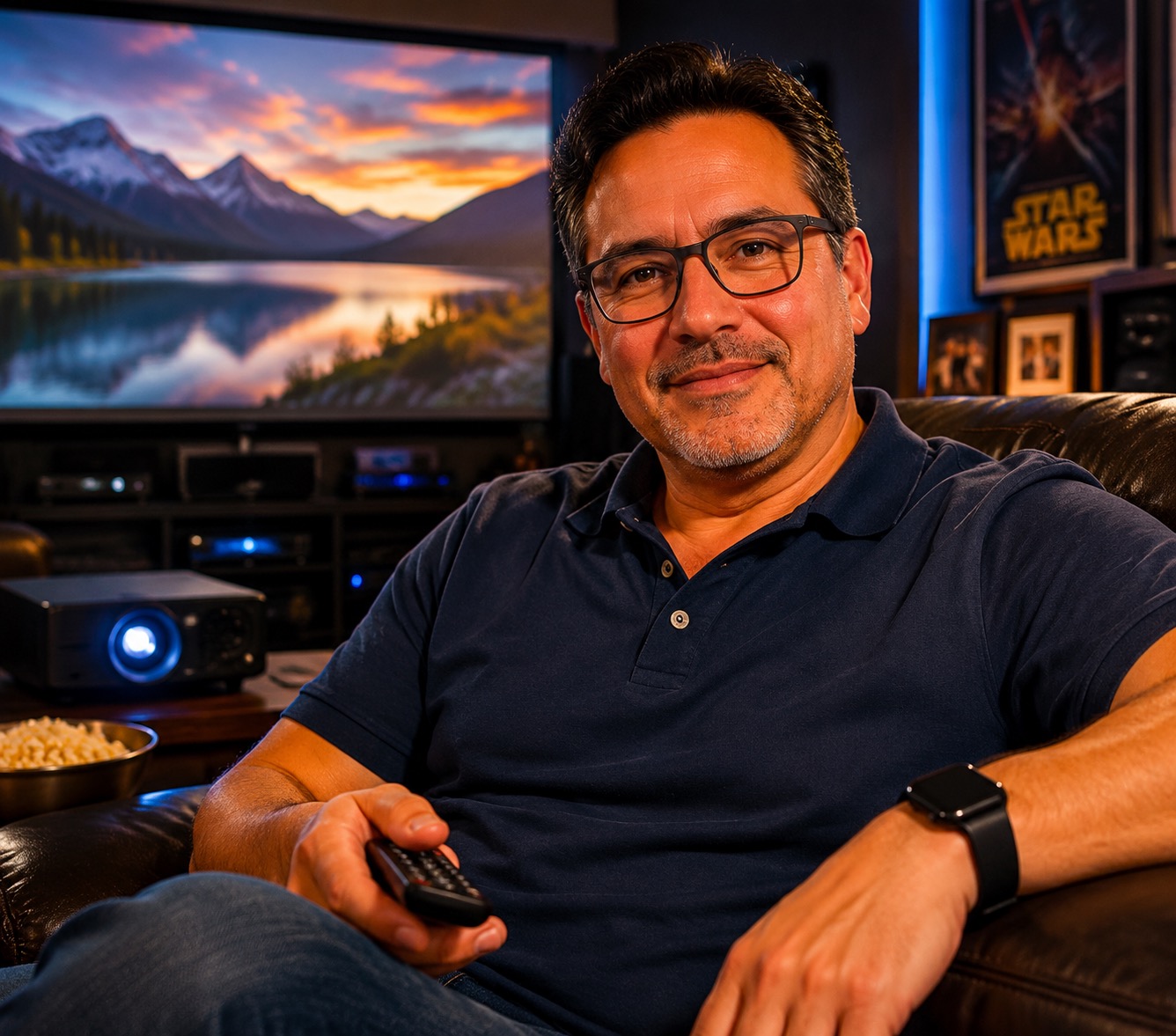
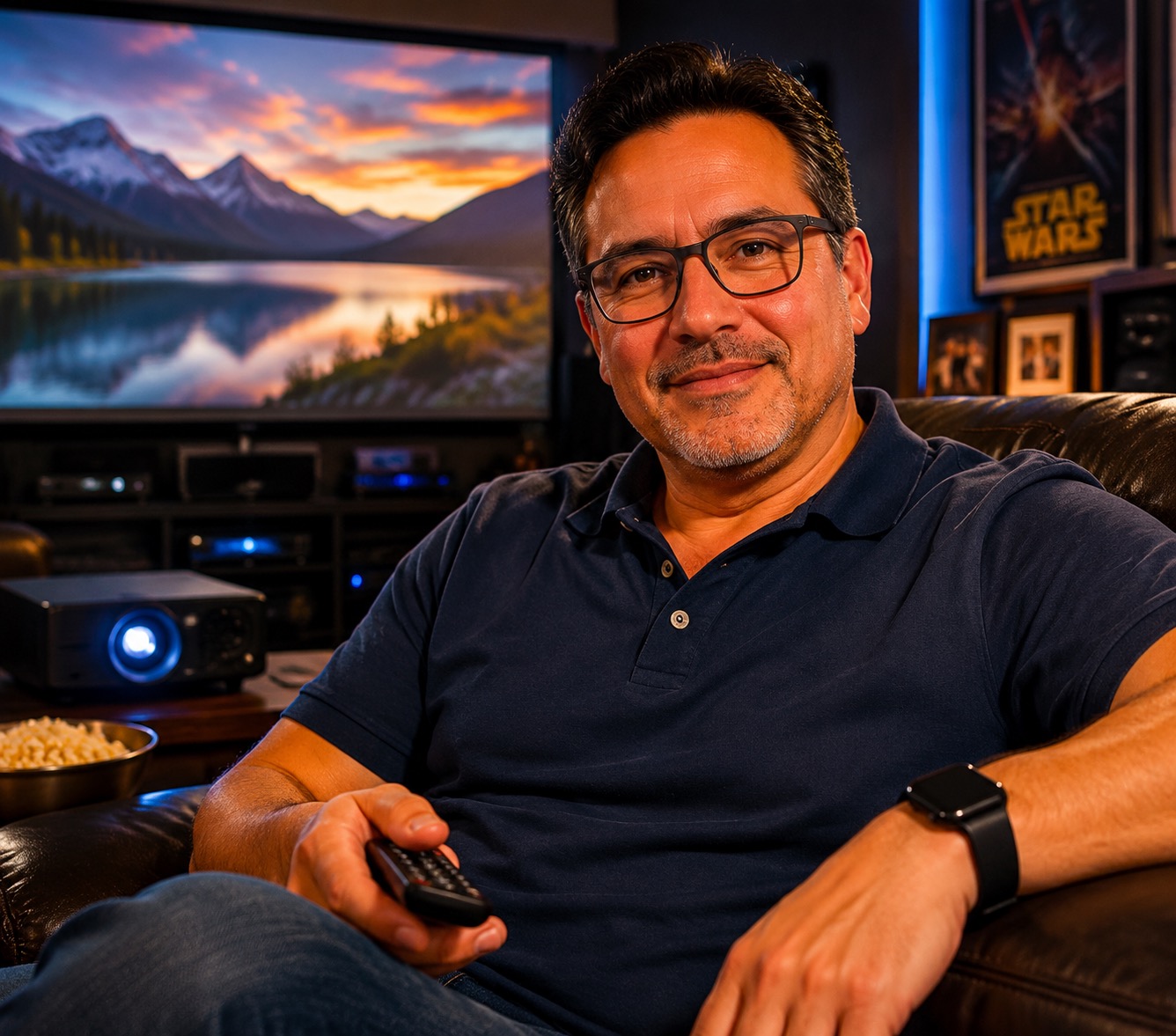
Home theater lighting color is one of those setup variables that most people ignore until they sit down for a movie in a half-lit room and realize the experience feels off. The screen looks washed out, the room feels clinical, and the immersion you paid serious money to build just isn’t landing the way it should.
Getting the ambient light behind and around your display dialed in costs a fraction of what you spent on your projector or receiver, and the perceptual payoff is disproportionately large. This guide breaks down how lighting color works in a theater context, which products earn their place in a real room, and what the spec sheets don’t tell you.
What Home Theater Lighting Color Actually Means
Bias Lighting vs. Ambient Lighting: Two Different Jobs
These two terms get used interchangeably online, but they do different things. Bias lighting refers specifically to light placed behind a display (TV or projection screen) that reduces the perceived contrast ratio between the bright screen and the dark wall behind it. Ambient lighting refers to any fill light in the room that affects the overall viewing environment, including floor-level lighting, wall washing, and ceiling glow.
Both categories intersect with home theater lighting color because the hue, saturation, and intensity of that light directly affect how your eyes interpret what’s on screen. Get it wrong, and you introduce color casts that shift your perception of the image without you realizing it. Get it right, and you reduce eye fatigue on long viewing sessions while also making the room feel intentionally designed rather than accidentally dark.
Why Color Temperature Is the First Variable to Understand
Color temperature is measured in Kelvins. A standard definition on the D65 reference white point used in home theater calibration falls around 6500K, which is a slightly cool, neutral white. Bias lights set too warm (below 4000K) push your perception of the screen toward blue, because your eyes compensate. Lights set too cool (above 7000K) do the opposite.
The Imaging Science Foundation and calibrators like Joel Silver have long recommended bias lighting matched as closely as possible to the display’s native white point. In practice, for most hobbyist setups, landing anywhere between 6000K and 6500K with low saturation is a reasonable baseline before you start experimenting with RGB color modes.
How Home Theater Lighting Color Works in a Real Room
The Room as a System
Adrian’s 14x18 foot dedicated room with a 9-foot ceiling is a useful worked example here. With a 120-inch ALR screen and an Epson 4010 projector doing the heavy lifting on the image, every ambient light decision in that room is a tradeoff between immersion and eye comfort. The back wall sits roughly 9 to 10 feet from the screen surface, meaning light from behind the screen or along the ceiling perimeter has enough travel distance to create visible wall wash rather than just a localized glow.
That room geometry is common in converted bonus rooms, and it’s exactly the use case where understanding the relationship between lighting color, wall color, and room dimensions becomes important. A dark charcoal or gray wall behind a bias light strip will absorb and diffuse. A white wall will bounce and potentially create hotspots visible during dark scenes.
Music Sync and Scene Reactive Modes
Several current mid-range LED products include audio-reactive or screen-syncing features. These are worth understanding separately from static bias lighting use. Music sync mode uses the microphone or line input on a controller to pulse the LED color with audio intensity. Screen-sync modes (typically camera-based) sample the edge colors of the display and mirror them on the backlight strip in near real time.
For a Dolby Atmos room, the music sync feature on a strip behind the seating area can add a visceral layer during action sequences, though it works best at lower sensitivity settings so it isn’t strobing with every low-frequency event. Camera-based screen sync is a more technically interesting feature that requires calibration of camera position relative to the screen to avoid color drift at the edges.
Why Home Theater Lighting Color Matters for Your Setup
Perceived Contrast and Eye Fatigue
The core physics here are well documented in display science literature. When your eyes adapt to a very dark room and then look at a bright screen, the high contrast ratio causes faster visual fatigue over a two-hour viewing session. A low-level bias light behind the display reduces that contrast ratio between the screen surround and the image without actually raising the ambient light level enough to crush blacks.
For projector rooms specifically, where you often cannot achieve the same peak brightness as a high-end OLED, this is more significant. Projector owners in the AVS Forum calibration community frequently note that a properly set bias light makes a mid-range projector punch closer to its actual measured output rather than looking dim by comparison to a bright room.
Color Rendering and the Limitation of Budget Options
Mid-range RGB LED strips (and most of what you’ll find in this product category) render color using red, green, and blue LEDs in combination. The color gamut they produce is narrow compared to RGBIC (independently controllable segment) strips or RGBICW products that add a dedicated white channel. This matters because a pure RGB white is a metamer: it looks white under some conditions but introduces a slight color cast that changes depending on the surface it’s illuminating.
For a dedicated theater room with dark walls, the difference is less visible than it would be in a bright living room. But it’s worth knowing the limitation before you spend time chasing a perfect 6500K match on a product that doesn’t have the white LED channel to get there cleanly.
Top Picks for Home Theater Lighting Color
Before getting into specific products, note that product selection in this category is a matter of matching the tool to the job. For setup and configuration context across all three products, the Buyer Guides section at Home Pictures Cinema has additional resources on room calibration and display setup.
KANTUTOE TV Backlights, 13.1FT LED Lights for 32-65 Inch TV
The KANTUTOE TV Backlights, 13.1FT LED Lights for 32-65 Inch TV, RGB TV LED Lights Behind, Music Sync Bluetooth APP and Remote Control TV LED Strip Lights USB Powered for Gaming/Bedroom is a Bluetooth-controlled RGB strip in the mid-range price band, sized for TVs between 32 and 65 inches. The 13.1-foot run length gives you enough strip material to frame a mid-size TV perimeter with some slack, and the USB power delivery means placement is limited only by USB port availability on the back of your TV or a nearby wall adapter.
Verified buyers on Amazon note that the app pairing via Bluetooth is generally reliable within range, and that the music sync feature responds well at medium sensitivity settings without requiring a direct line-in connection. The remote control option is a practical fallback for households where a second phone user wants to adjust colors without opening the app.
The RGB color rendering is competent for accent and bias lighting purposes in a darker room. Owner reviews indicate the strip adheres well to flat TV backs but may require additional mounting tape on curved surfaces. For a 14x18 foot room where the TV or projector screen is the only light anchor, this strip works as a starting point for bias lighting without requiring smart home integration.
The limitation at this price band is expected: no dedicated white channel means the 6500K white mode is a metamer mix rather than a true white point, and the individual segments are not independently addressable, so screen-sync is not supported. If you’re running a strict calibrated setup and want the bias light to match your display’s white point precisely, that’s a known gap. For general movie night use and gaming, field reports suggest it performs consistently.
Check current price on Amazon.
Govee TV Backlight 3 Lite with Fish-Eye Correction Function
The Govee TV Backlight 3 Lite with Fish-Eye Correction Function Sync to 55-65 Inch TVs, 11.8ft RGBICW Wi-Fi LED Strip Lights with Camera, 4 Colors in 1 Lamp Bead, Voice and APP Control, Adapter is the most technically capable product in this comparison. The camera-based screen sync is the differentiating feature: a small wide-angle camera mounts at the top edge of the TV frame and samples the display output in real time, feeding color data back to independently addressable RGBICW segments on the strip.
The RGBICW configuration adds a dedicated cold white and warm white channel alongside the RGB LEDs. That four-color-in-one lamp bead architecture is what allows this strip to produce cleaner white points than pure RGB alternatives. Owner reports from the Govee subreddit and Amazon verified buyers consistently note that the fish-eye correction in the app matters: without running through the calibration step, edge segments can mirror incorrect colors, particularly on widescreen content with letterbox bars.
For a room configured like Adrian’s setup, where the projector screen is 120 inches and a camera-based product is sized for 55-65 inch TVs, this product is correctly scoped for TV-centric setups rather than projection rooms. In a mixed-use room or a second display setup, the camera sync mode provides a level of dynamic ambient lighting that static strips cannot match. The Wi-Fi connectivity rather than Bluetooth means range is not a limiting factor within a home network.
The setup process is more involved than simpler strips. Field reports indicate the camera calibration requires patience, and the Govee Home app has had periodic firmware update issues noted in buyer reviews. For users willing to work through initial configuration, the payoff in screen-reactive lighting is substantial compared to anything in the budget tier.
Check current price on Amazon.
Neroupe Sunset Lamp Projector with APP and Button Control
The Neroupe Sunset Lamp Projector with APP & Button Control, 360 Degree Rotation Multiple Colors Changing LED Lamp Night Light, Sunset Light for Bedroom Decor/Party/Tiktok Live/Room Decor occupies a different functional category than the strip lights above. This is a freestanding projection lamp that casts a circular gradient of warm sunset-style color across a wall or ceiling surface. The 360-degree rotation and multi-color modes allow it to serve as room fill lighting, pre-show ambiance, or a soft atmospheric anchor in a dedicated theater space.
Verified buyers note that the warm orange-to-red gradient the lamp projects at default settings creates an immediately recognizable sunset aesthetic, and that the color changing modes via app cover a wider range than the name implies. In a home theater context, this product works best during pre-show setup, post-movie cooldown periods, or as an ambient fill light in a room where you want something visually interesting without turning on overhead lights.
For the 14x18 foot room scenario, placing this lamp on a side table or equipment shelf at the back of the room gives you a low-level, warm-toned fill that does not compete with the projected image during playback. Owner reports indicate it works well on 9-foot ceilings, where the projection reaches the upper wall and ceiling junction cleanly. The button control backup alongside the app is a practical feature that buyers consistently mention as a reason for satisfaction.
The limitation is scope: this is an atmospheric accent product, not a bias lighting or screen-sync solution. It does not measure, calibrate, or react to your display output. For rooms where you want a single low-commitment ambient lighting option that doubles as decor between screenings, the Neroupe lamp fits. For serious bias lighting work behind a display, it is the wrong tool.
Check current price on Amazon.
Buying Guide: Choosing the Right Home Theater Lighting Color Setup
Match the Product to the Display Type
The first filter to apply is display type: flat-panel TV versus front projector. Strip lights sized for 55-65 inch TVs physically cannot wrap a 120-inch projection screen perimeter, and camera-sync products calibrated for TV panels will not work correctly pointed at a projection surface. Projector room owners need to think about perimeter lighting at the room level (side walls, ceiling coves, seating area strips) rather than behind-display bias lighting.
For TV setups, the product category works as labeled. The key spec to check is total strip length relative to your TV’s perimeter measurement. Measure the back of your TV before ordering.
Understand What RGB vs. RGBICW Means for Color Accuracy
Pure RGB strips produce white by mixing red, green, and blue channels. The resulting white is a metameric match that looks approximately white to the eye but does not render a true broadband white. On dark walls in a theater room, this rarely creates a visible problem during viewing. On lighter walls or in rooms with reflective surfaces, the color cast can become perceptible.
RGBICW strips add dedicated white LED channels, which produce a cleaner white point across a range of color temperatures. If matching your bias light to a calibrated display white point is a priority, RGBICW is the correct architecture. The Buyer Guides hub has additional detail on display calibration concepts that inform this decision.
App and Smart Home Integration Considerations
Bluetooth-based control is simpler to set up but range-limited and typically not integrated into broader smart home platforms like Google Home or Amazon Alexa without a separate hub. Wi-Fi based products connect directly to your home network and are generally accessible from anywhere with an internet connection, with voice control available through compatible platforms.
For a dedicated theater room where you are always within Bluetooth range, the connectivity difference is minor. For users who want lighting automation tied to a home theater control system or a smart home routine, Wi-Fi integration is the more capable path.
Sensitivity Settings on Music Sync Features
Music sync is listed as a feature on several products in this category, and the execution varies. At default high-sensitivity settings, these modes can produce rapid color pulsing that is visually distracting during dialogue-heavy scenes. Owner reports across multiple products consistently recommend reducing microphone sensitivity in the app settings to a level where the lights respond to significant bass events and score swells rather than every ambient sound in the room.
For a 7.1.2 Atmos room with a tuned subwoofer like the SVS PB-1000 Pro, the music sync mode picks up low-frequency room pressurization at high sensitivity settings and pulses continuously during LFE-heavy content. Calibrating sensitivity downward resolves this in most field reports.
Placement and Adhesion in a Dedicated Room
Strip adhesion is a consistent discussion point in buyer reviews. The 3M adhesive backing on most mid-range strips adheres reliably to clean, smooth surfaces at room temperature. On textured walls, bumpy TV backs, or surfaces with existing paint texture, supplemental mounting clips or additional adhesive tape are frequently recommended by verified buyers.
In a dedicated room, running strips along a ceiling cove or behind a screen masking frame requires planning the power cable routing before you commit to final adhesion. Removing and re-adhering strips typically degrades the adhesive, so plan placement carefully before sticking anything down permanently.
Frequently Asked Questions
What color should bias lighting be behind a TV or projector screen?
The standard recommendation from display calibration professionals is a neutral white matched as closely as possible to 6500K, which corresponds to the D65 white point used in home theater calibration. This minimizes color cast on your screen perception. In practice, many users find that a slightly warm setting around 5500K-6000K is more comfortable for long sessions. Highly saturated colors like deep red or blue behind a display actively distort how your eyes interpret the on-screen image.
Does the color of bias lighting actually affect perceived picture quality?
Yes, and the effect is documented in display science research. Your visual system adapts to the surround light color and adjusts its perception of the screen’s white point accordingly. A bias light set to a strongly warm color will make a calibrated display appear to shift toward cool tones because your eyes compensate. Keeping bias light neutral and dim, roughly 10 percent of peak screen brightness, produces the most accurate perceived image without introducing a competing color reference.
Can I use a sunset lamp as bias lighting for a home theater?
A sunset lamp like the Neroupe functions as atmospheric ambient fill, not bias lighting. Bias lighting requires placement directly behind the display at a controlled intensity and color temperature that matches the screen’s white point. A sunset lamp projects warm gradient color onto a wall or ceiling at a much higher saturation level than bias lighting best practices recommend. It works well as pre-show ambiance or room decor between screenings, but should not be the primary light source during calibrated viewing.
Is a camera-sync backlight worth the extra cost over a standard RGB strip?
For TV setups where you want the ambient lighting to dynamically match the on-screen content, camera-sync products like the Govee TV Backlight 3 Lite offer a meaningfully different experience than a static or music-reactive strip. Owner reports consistently describe the screen-reactive effect as more immersive during cinematic content. The tradeoff is a more involved setup process and a reliance on the manufacturer’s app ecosystem. For users who primarily want a fixed neutral bias light, the camera sync feature is not necessary.
Will home theater lighting color interfere with my Dolby Atmos or calibrated audio setup?
Lighting products in this category are entirely separate from your audio chain and have no electrical or signal interaction with your receiver, amplifier, or speaker system. The one indirect consideration in an Atmos room is that music-sync LED features use a microphone to detect audio, which means the room’s acoustic output affects the lighting behavior. This is a feature interaction, not interference. Your Audyssey or manual calibration settings are not affected by ambient lighting of any kind.
<script type="application/ld+json">
{
 "@context": "https://schema.org",
 "@type": "FAQPage",
 "mainEntity": [
 {
 "@type": "Question",
 "name": "What color should bias lighting be behind a TV or projector screen?",
 "acceptedAnswer": {
 "@type": "Answer",
 "text": "The standard recommendation from display calibration professionals is a neutral white matched as closely as possible to 6500K, which corresponds to the D65 white point used in home theater calibration. This minimizes color cast on your screen perception. In practice, many users find that a slightly warm setting around 5500K-6000K is more comfortable for long sessions. Highly saturated colors like deep red or blue behind a display actively distort how your eyes interpret the on-screen image."
 }
 },
 {
 "@type": "Question",
 "name": "Does the color of bias lighting actually affect perceived picture quality?",
 "acceptedAnswer": {
 "@type": "Answer",
 "text": "Yes, and the effect is documented in display science research. Your visual system adapts to the surround light color and adjusts its perception of the screen's white point accordingly. A bias light set to a strongly warm color will make a calibrated display appear to shift toward cool tones because your eyes compensate. Keeping bias light neutral and dim, roughly 10 percent of peak screen brightness, produces the most accurate perceived image without introducing a competing color reference."
 }
 },
 {
 "@type": "Question",
 "name": "Can I use a sunset lamp as bias lighting for a home theater?",
 "acceptedAnswer": {
 "@type": "Answer",
 "text": "A sunset lamp like the Neroupe functions as atmospheric ambient fill, not bias lighting. Bias lighting requires placement directly behind the display at a controlled intensity and color temperature that matches the screen's white point. A sunset lamp projects warm gradient color onto a wall or ceiling at a much higher saturation level than bias lighting best practices recommend. It works well as pre-show ambiance or room decor between screenings, but should not be the primary light source during calibrated viewing."
 }
 },
 {
 "@type": "Question",
 "name": "Is a camera-sync backlight worth the extra cost over a standard RGB strip?",
 "acceptedAnswer": {
 "@type": "Answer",
 "text": "For TV setups where you want the ambient lighting to dynamically match the on-screen content, camera-sync products like the Govee TV Backlight 3 Lite offer a meaningfully different experience than a static or music-reactive strip. Owner reports consistently describe the screen-reactive effect as more immersive during cinematic content. The tradeoff is a more involved setup process and a reliance on the manufacturer's app ecosystem. For users who primarily want a fixed neutral bias light, the camera sync feature is not necessary."
 }
 },
 {
 "@type": "Question",
 "name": "Will home theater lighting color interfere with my Dolby Atmos or calibrated audio setup?",
 "acceptedAnswer": {
 "@type": "Answer",
 "text": "Lighting products in this category are entirely separate from your audio chain and have no electrical or signal interaction with your receiver, amplifier, or speaker system. The one indirect consideration in an Atmos room is that music-sync LED features use a microphone to detect audio, which means the room's acoustic output affects the lighting behavior. This is a feature interaction, not interference. Your Audyssey or manual calibration settings are not affected by ambient lighting of any kind."
 }
 }
 ]
}
</script>Where to Buy
KANTUTOE TV Backlights, 13.1FT LED Lights for 32-65 Inch TV, RGB TV LED Lights Behind, Music Sync Bluetooth APP and Remote Control TV LED Strip Lights USB Powered for Gaming/BedroomSee KANTUTOE TV Backlights, 13.1FT LED Li… on Amazon