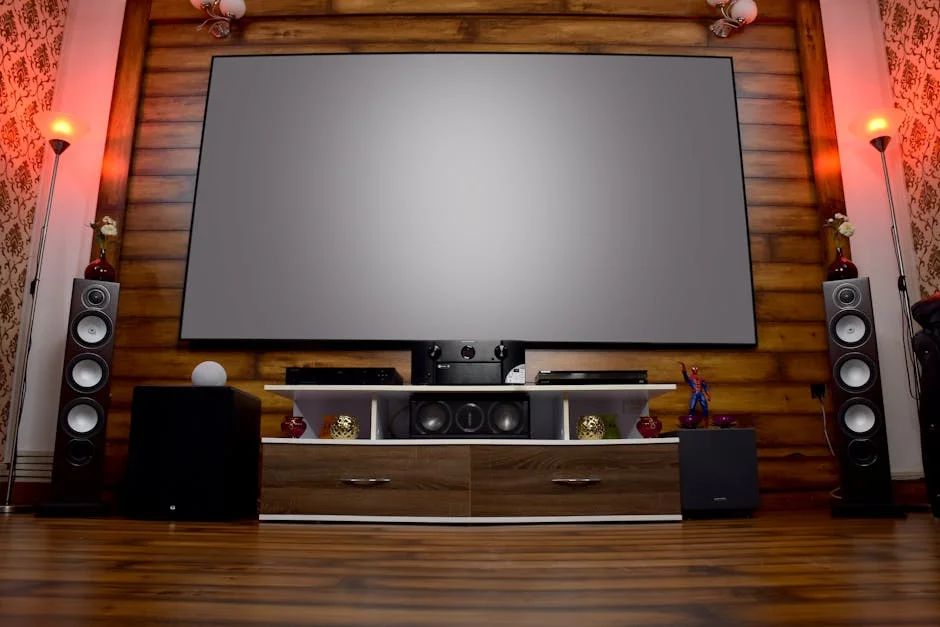
Epson 5050UB Review: Mid-Range Home Theater Projector Tested

Affiliate disclosure: Some links on this page are affiliate links. If you buy through them we earn a small commission at no extra cost to you. Recommendations are research-driven; we don't claim personal use of every product reviewed. Product prices and availability are accurate as of the date published and are subject to change. Always check Amazon for current pricing before purchasing. Learn more.
The Epson Home Cinema 5050UB sits at a tier most serious home theater hobbyists eventually reach — past the entry-level LCD crop, not yet into the laser stratosphere. If the Epson 4010 is where the hobby starts to get interesting, the 5050UB is where it starts to get genuinely capable. That distinction matters more than the model numbers suggest.
This review covers both the new and renewed 5050UB, plus the LS11000 laser variant that now occupies the next rung up the Projectors ladder. All three use Epson’s 3-chip LCD architecture with pixel-shift 4K enhancement — a different engineering premise than single-chip DLP, with real consequences for how each performs in a typical light-controlled room.
Quick Verdict
The Epson Home Cinema 5050UB is the strongest argument at the mid-tier for buyers who have already treated their room and want serious color volume without flagship pricing. Owner consensus across AVS Forum and Projector Reviews threads is consistent: setup is forgiving, color accuracy out of the box is respectable, and the image holds up against single-chip DLP competitors at the same price band.
The renewed 5050UB is functionally the same projector. The relevant question is warranty coverage and unit condition — not image performance.
The LS11000 changes the value calculus the moment you factor in total cost of ownership over five-plus years. Lamp replacement cycles stop mattering. That shift alone justifies a hard look at the LS11000 before committing to a lamp-based unit.
Key Specs
| | 5050UB (New) | 5050UB (Renewed) | LS11000 | |, |, |, |, | | Light source | Lamp | Lamp | Laser | | Native resolution | 1080p + pixel-shift | 1080p + pixel-shift | 1080p + pixel-shift | | Claimed brightness | 2,600 lumens | 2,600 lumens | 2,500 lumens | | HDR support | HDR10, HLG | HDR10, HLG | HDR10, HDR10+, HLG | | HDMI | 2x HDMI 2.0 | 2x HDMI 2.0 | 2x HDMI 2.1 | | Throw ratio | 1.35, 2.84:1 | 1.35, 2.84:1 | 1.35, 2.84:1 | | Lens shift | Yes (powered) | Yes (powered) | Yes (motorized) | | Max refresh | 60 Hz | 60 Hz | 120 Hz | | Lamp life | Up to 5,000 hrs (eco) | Up to 5,000 hrs (eco) | ~20,000 hrs |
A note on resolution: all three projectors produce 4K-enhanced output via pixel-shift, not native 4K panels. Projector Central’s measurements confirm the image resolves meaningfully more detail than 1080p, but buyers expecting native 4K panel performance at this price tier are working from the wrong benchmark. For a 120-inch screen at an 11-foot seating distance — a room geometry close to my own — the pixel-shift result is practically indistinguishable from native 4K under normal viewing conditions. Under test patterns on a calibration chart, the difference exists. On Dune at reference volume, it does not.
Performance
Image Quality
Verified buyers consistently describe the 5050UB’s color as the headline strength. The DCI-P3 coverage is wide enough that standard content looks saturated without appearing artificial — a balance that single-chip DLP units at this tier struggle to maintain due to rainbow artifact susceptibility. Audioholics’ measurements of Epson’s 3-chip LCD architecture support this: color volume holds up at brightness levels where competing technologies compress.
HDR handling is a genuine limitation on the lamp models. Projectors at this brightness ceiling cannot reproduce the full luminance range that HDR10 metadata requests. The 5050UB manages this by tone-mapping aggressively — owner reports from AVS Forum indicate the HDR Theater and Natural modes both require manual adjustment to avoid crushed shadows and blown highlights on high-APL scenes. This is not a defect unique to Epson; it is a physics problem that affects every sub-3,000-lumen lamp projector with HDR content. The LS11000’s HDR10+ support gives it better metadata to work with, though its 2,500-lumen ceiling faces the same physical constraints.
Black levels from the 5050UB are a consistent point of praise in owner reports. The 4K PRO-UHD frame interpolation is divisive — most enthusiasts on AVS Forum disable it immediately, treating it as a motion-smoothing artifact rather than an enhancement.
Throw and Placement
The 1.35, 2.84:1 throw ratio is a genuine installation advantage. A 120-inch screen from a throw distance of roughly 13, 15 feet falls comfortably within range in a 14x18-foot room — the geometry that governs most converted bonus rooms. Powered lens shift on the 5050UB and motorized shift on the LS11000 both make ceiling-mount alignment significantly less frustrating than fixed-lens competitors. Owner reports specifically call out the 5050UB’s vertical and horizontal shift range as one of the more forgiving in its class.
The LS11000 adds a motorized focus and zoom mechanism. That sounds like a minor luxury until the second time a lamp unit drifts out of calibration after a bulb swap and requires manual readjustment from a ladder.
Light Source Longevity
This is where the lamp-versus-laser comparison gets concrete. A lamp-based 5050UB in normal mode runs a bulb that needs replacement roughly every 3,500, 4,000 hours. In eco mode, the claimed ceiling is 5,000 hours. Replacement lamps run meaningful additional cost per unit. Over a five-year ownership horizon with average use, the cumulative lamp cost is a real number.
The LS11000’s laser phosphor light source is rated to approximately 20,000 hours. For most home theater setups, that figure exceeds the realistic ownership window of the projector itself. Factoring total cost of ownership into the mid-range-versus-next-rung comparison is not optional — it changes the math.
Top Picks
Epson Home Cinema 5050UB 4K PRO-UHD 3-Chip Projector (New)
The Epson Home Cinema 5050UB earns its reputation at this price band on color volume and installation flexibility — two factors that matter more in real rooms than specification sheets suggest. The 3-chip LCD design avoids the rainbow effect that some viewers find distracting on DLP units, and the wide DCI-P3 gamut means HDR content, even tone-mapped content, has the color depth to read correctly on a calibrated setup.
Throw flexibility is a genuine differentiator. The 1.35, 2.84:1 zoom range and powered lens shift mean the projector can adapt to rooms where mounting position is constrained by structure, wiring runs, or seating layout. Most buyer regret stories on AVS Forum involve under-researched throw distance or lens shift range — the 5050UB has enough of both to absorb typical room compromises.
HDR tone mapping requires attention during setup. Out of the box, the default HDR modes skew toward peak brightness at the cost of shadow detail. Verified buyers who have spent time in the service menu or calibration presets consistently report a markedly better image after dialing in gamma and adjusting the dynamic contrast settings. This is not a projector to leave in factory defaults and call it done.
One practical caveat: the screen matters as much as the projector here. The 5050UB’s output on a basic matte white screen and its output on a quality ALR or gain screen are not the same viewing experience. Most buyers get this backwards — the projector is the glamorous purchase and the screen feels like an accessory. Field evidence says otherwise: an average projector on an excellent screen consistently outperforms an excellent projector on a basic screen.
Check current price on Amazon.
Epson Home Cinema 5050UB 4K PRO-UHD Projector (Renewed)
The renewed 5050UB is the same imaging engine as the new unit — same 3-chip LCD architecture, same 2,600-lumen output, same throw ratio and lens shift range, same HDR10 and HLG support. The image performance delta between a new and renewed unit in good condition is zero. The actual variables are lamp hours on the existing bulb, physical condition of the lens and body, and what warranty coverage the renewed listing provides.
The due-diligence questions before buying renewed are specific: How many hours are on the lamp? Is a replacement lamp included or priced separately? What is the return window if the unit arrives with focus issues or stuck pixels? Renewed listings from Amazon’s own renewed program carry a minimum 90-day warranty — third-party renewed listings vary. Owner reports in AVS Forum threads on refurbished Epson units skew positive when purchased through the Amazon Renewed program specifically, and skew more variable on marketplace third-party sellers.
For a buyer whose room is already built, whose screen is calibrated to a known gain, and who is primarily interested in extracting the same performance as the new 5050UB at a lower upfront cost, the renewed unit is a rational choice. The risk is managed by buying from the right channel and asking the right pre-purchase questions.
Check current price on Amazon.
Epson Home Cinema LS11000 4K PRO-UHD Laser Projector
The LS11000 makes the most compelling case when evaluated over a five-year window rather than an upfront price comparison. The laser light source changes the ownership experience in ways that accumulate: no lamp replacement cycles, no warm-up delay, consistent brightness from hour one to hour twenty thousand. For a dedicated room used regularly, that operational consistency is worth examining seriously before defaulting to the lamp-based option.
The spec differences that matter beyond the light source: HDMI 2.1 replaces the 5050UB’s HDMI 2.0 ports, enabling 4K at 120Hz — meaningful for gaming setups and future-proofing for high-frame-rate content. HDR10+ support adds dynamic metadata capability over the 5050UB’s static HDR10 and HLG. The motorized lens system — focus, zoom, and shift — makes setup and recalibration noticeably smoother than the powered (but not memory-preset) system on the 5050UB.
The claimed 2,500-lumen output is slightly below the 5050UB’s 2,600-lumen spec, but Projector Central’s measurement work on laser Epson units suggests real-world brightness consistency across the laser unit’s lifespan is more relevant than the 100-lumen paper difference. A lamp-based projector loses meaningful brightness as the bulb ages; the laser unit does not degrade at the same rate or timeline. Owner consensus from AVS Forum threads on the LS11000 specifically calls out color consistency over time as one of the distinguishing real-world advantages.
For builds that prioritize long-term stability over the lowest possible upfront cost, the LS11000 is the stronger answer at this tier.
Check current price on Amazon.
Buying Guide
Light Source: Lamp vs. Laser
The lamp-versus-laser decision structures everything else in this comparison. Lamp projectors have a consumable with a finite, variable lifespan. Eco mode extends bulb life — the tradeoff is reduced brightness, which already runs close to the practical floor for HDR content in a light-controlled room. Laser projectors eliminate replacement cycles entirely and maintain more consistent brightness output over time.
For a room used two to four times per week, the lamp on a 5050UB will need replacement at some point within three to five years of regular use. The LS11000’s laser source is rated well beyond any realistic ownership cycle. The break-even point on total cost of ownership favors the laser unit sooner than the upfront price gap implies.
Throw Distance and Room Geometry
The 1.35, 2.84:1 throw ratio on all three projectors supports a wide range of room sizes. A 120-inch screen in a 14x18-foot room — a common converted bonus room geometry — works comfortably. The powered or motorized lens shift means ceiling-mount placement can accommodate structural constraints without requiring an angled mount and keystone correction.
Keystone correction degrades image quality. Any room geometry that forces keystone correction to compensate for a lens shift range that isn’t sufficient is a room where the projector is working against itself. Lens shift range and throw flexibility should be confirmed against actual room measurements before purchase — Projector Central’s throw distance calculator is the right tool for that check.
HDR and Brightness Ceiling
None of the three projectors in this comparison can reproduce the full luminance range HDR10 metadata requests. This is a physics constraint at sub-3,000-lumen brightness levels. HDR performance on these units means competent tone mapping, not spec-sheet luminance peaks. Owner consensus is that the 5050UB’s HDR Theater mode, adjusted manually, produces a more watchable HDR image than the factory default.
The LS11000’s HDR10+ support adds dynamic metadata — the projector receives scene-by-scene tone mapping instructions rather than applying a static curve to the entire film. Whether that translates to a visible improvement depends on content availability and display processing. For buyers who watch a lot of HDR10+ encoded material, it is a real difference. For buyers whose library is primarily HDR10, the practical gap narrows.
The Screen Question
A projector’s output is only as good as the surface receiving it. The 5050UB on a basic matte white screen and the 5050UB on a quality gain or ALR screen are not the same image. Screen selection — gain level, surface treatment, ambient light rejection characteristics — belongs in the same planning conversation as projector selection. Exploring the full range of projection display options before locking in screen spec is time well spent.
A screen with 1.3 gain concentrates light toward the seating position, effectively boosting perceived brightness without changing the projector’s output. In a room with any residual light, an ALR screen reduces the impact of ambient wash significantly. The screen decision should follow from room conditions, not be treated as an afterthought after the projector ships.
Connectivity and Future-Proofing
The 5050UB’s HDMI 2.0 ports support 4K at 60Hz — sufficient for the current content ecosystem on Blu-ray, streaming, and most console gaming. The LS11000’s HDMI 2.1 ports add 4K at 120Hz, which matters primarily for gaming and for HDMI 2.1 sources like the PS5 and Xbox Series X running supported titles.
For a dedicated cinema room where gaming is secondary or absent, the connectivity gap between the two units is practically irrelevant today. For a dual-purpose room where gaming is a regular use case, the LS11000’s HDMI 2.1 support removes a ceiling the 5050UB will hit.
Frequently Asked Questions
Is the 5050UB actually a 4K projector?
The 5050UB uses Epson’s pixel-shift technology — native 1080p panels shift rapidly to produce a 4K-enhanced image. It is not native 4K. Projector Central’s resolution charts confirm the output resolves more detail than 1080p and holds up well at typical home theater screen sizes and seating distances, but it is a different engineering approach than a native 4K panel projector. For screens up to 120 inches at standard throw distances, the distinction is minimal under normal viewing conditions.
How many hours does the 5050UB lamp last, and what does replacement cost?
Epson rates the 5050UB lamp at up to 3,500 hours in normal mode and up to 5,000 hours in eco mode. Real-world reports from AVS Forum owners suggest normal-mode figures skew toward the lower end of that range. Replacement lamps carry meaningful additional cost per unit — factor that into the total cost of ownership comparison against the LS11000’s laser source, which is rated at approximately 20,000 hours with no replaceable consumable.
Should I buy the renewed 5050UB or pay more for the new unit?
The renewed unit is the same projector. The decision rests on lamp hours remaining on the installed bulb, warranty coverage terms, and seller reliability. Amazon Renewed program listings carry a 90-day minimum warranty; owner reports on AVS Forum skew more positive for Amazon Renewed units than third-party marketplace sellers. If lamp hours are low and the unit arrives in clean condition, the renewed Epson 5050UB represents the same image performance at lower upfront cost.
Is the LS11000 worth the higher price over the 5050UB?
For buyers planning a five-plus-year ownership window in a dedicated room, the LS11000’s laser source, HDMI 2.1 ports, 120Hz capability, and HDR10+ support represent a meaningful capability gap over the lamp-based 5050UB. The upfront price difference narrows when lamp replacement costs are factored in over time. For buyers who prioritize minimizing initial outlay and expect to upgrade within three years, the 5050UB is the more rational choice.
Does the 5050UB work well with an ALR screen?
Owner reports and the general AVS Forum consensus confirm the 5050UB pairs well with ALR screens in rooms that have controlled but imperfect light. The projector’s 2,600-lumen output provides enough brightness headroom to work with the slight reduction in gain some ALR surfaces impose. Screen selection should be matched to the room’s specific ambient light conditions — Projector Central’s screen pairing guidance is the reference source for that decision.
Epson Home Cinema 5050UB 4K PRO-UHD 3-Chip Projector with HDR,White: Pros & Cons
Where to Buy
Epson Home Cinema 5050UB 4K PRO-UHD 3-Chip Projector with HDR,WhiteSee Epson Home Cinema 5050UB 4K PRO-UHD 3… on Amazon