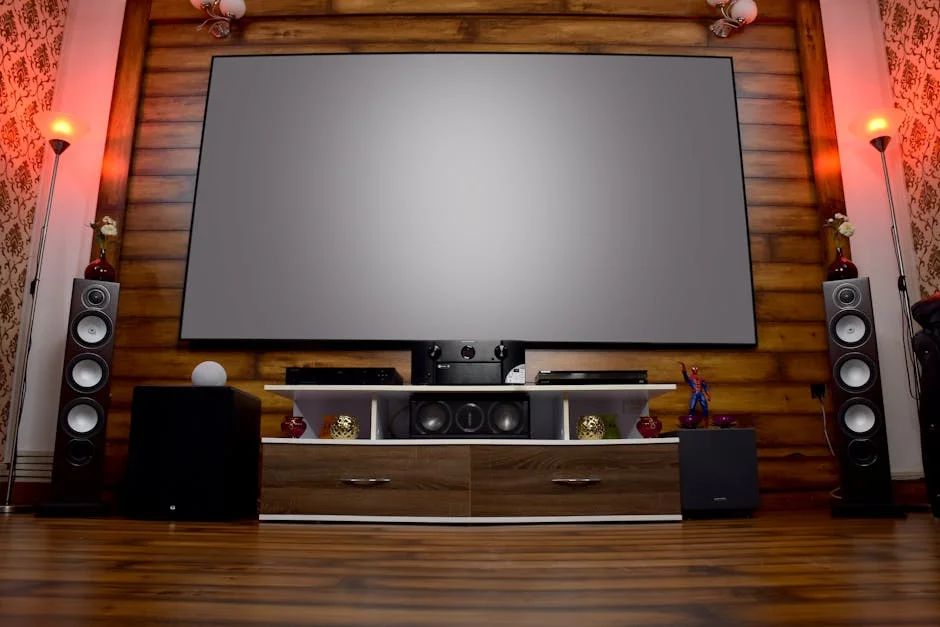
Projector HDR vs TV HDR: Key Differences Explained

Affiliate disclosure: Some links on this page are affiliate links. If you buy through them we earn a small commission at no extra cost to you. Recommendations are research-driven; we don't claim personal use of every product reviewed. Product prices and availability are accurate as of the date published and are subject to change. Always check Amazon for current pricing before purchasing. Learn more.
HDR on a projector and HDR on a TV are not the same experience — not even close. A television achieves HDR through local dimming, peak nits that push into the thousands, and a panel that controls light at the pixel level. A projector bounces light off a surface in a room that’s rarely as dark as a lab, and peak brightness is a ceiling, not a guarantee. Understanding that gap is the starting point for anyone comparing these options in the projectors category.
The four projectors covered here — the PUTRIMS K12, AILESSOM native 1080P, XGIMI Halo+, and HAPPRUN 2000 ANSI — sit in the mid-range tier where HDR marketing and HDR reality diverge most sharply. Each handles tone mapping, brightness, and color volume differently. The goal here is to give buyers a clear picture of what they’re actually getting.
Side-by-Side
Before comparing them in prose, it’s worth establishing what each unit actually is on paper — native resolution, measured or rated lumen output, light source type, and HDR spec. These four numbers tell most of the story before a single frame is displayed.
The PUTRIMS K12 is a 1080P LCD projector with Google TV built in, WiFi 6, auto-focus, and Bluetooth. Its rated lumen output sits in the marketing-bright range typical for this tier — real-world ANSI lumens will be meaningfully lower than the headline figure. HDR10 support is listed; Dolby Vision is not. It runs a lamp light source.
The AILESSOM 20000LM leads with a 20,000-lumen claim that should be read skeptically — that figure reflects LED-rated lumens, not ANSI lumens, which measure actual screen brightness under controlled conditions. Native resolution is 1080P. It accepts 4K input but downscales. HDR support is listed but tone mapping documentation is thin. Light source is LED.
The XGIMI Halo+ is the outlier here — a genuine portable with a built-in battery, 700 ISO lumens (ISO, not marketing lumens — that’s the honest figure), licensed Netflix via Google TV, and Harman Kardon dual 5W speakers. It uses LED. Auto-focus and intelligent screen adaptation (ISA) are hardware-level features, not software tricks. HDR10 support is present; peak brightness is modest by design.
The HAPPRUN 2000 ANSI is notable for advertising ANSI lumens — 2,000 ANSI — rather than LED-rated lumens. That distinction matters enormously for cross-unit comparison. It adds Dolby Audio, WiFi 6, Bluetooth 5.2, and built-in streaming apps. 4K decoding is listed; native resolution is lower. Light source type requires verification against current spec sheet.
| | PUTRIMS K12 | AILESSOM 20000LM | XGIMI Halo+ | HAPPRUN 2000 ANSI | |, |, |, |, |, | | Native Res | 1080P | 1080P | 1080P | Sub-1080P (4K decode) | | Lumen spec | Marketing | LED-rated | 700 ISO | 2000 ANSI | | Light source | Lamp | LED | LED | LED | | HDR | HDR10 | HDR10 | HDR10 | HDR10 | | Dolby Vision | No | No | No | No | | Built-in OS | Google TV | None listed | Google TV | Built-in apps | | Portability | No | No | Yes (battery) | No |
Key Differences
Lumen Specs and What They Actually Mean
The biggest source of confusion across these four units is lumen terminology. ANSI lumens and LED-rated lumens are not interchangeable. ANSI lumens measure projector output under a standardized test — nine points across the projected image, averaged. LED-rated or “manufacturer lumens” measure the LED chip itself, not the light reaching your screen after lens, optics, and color wheel losses. A projector claiming 20,000 LED lumens might deliver 800, 1,200 ANSI lumens at the screen. The HAPPRUN’s 2,000 ANSI lumen spec, if accurate, is the most directly comparable figure in this group. The XGIMI’s 700 ISO lumens is honest and modest — they know the number and publish it.
For HDR specifically, this matters because HDR tone mapping on a projector depends entirely on available brightness headroom. A projector with 800 ANSI lumens cannot reproduce the HDR highlight peaks that make HDR visually meaningful — instead, the processor compresses the tone curve down into the available range. Well-implemented tone mapping on a modest-brightness projector can still look good, but it is not the same experience as a 1,500+ ANSI lumen projector with more headroom to work with.
HDR Implementation vs. HDR Acceptance
Every projector in this group lists HDR10 support. That phrase means the unit can accept an HDR10 signal. It says nothing about how that signal is processed. Tone mapping quality — the algorithm that compresses a 1,000-nit HDR signal into 200, 800 projector nits — varies enormously between manufacturers and is rarely documented in spec sheets.
XGIMI has a longer track record of publishing tone mapping behavior on AVS Forum and its own technical documentation. The PUTRIMS K12, running Google TV, benefits from Android’s HDR processing pipeline, which handles some of that work at the OS level before it reaches the display engine. The AILESSOM and HAPPRUN have less documented behavior in this area, which means buyers are relying on owner reports rather than verified measurements.
Portability and Use Context
The XGIMI Halo+ is the only unit here with a built-in battery — 2.5 hours of playtime. That defines an entirely different use case from the other three. It’s not primarily a living room projector competing for the same installation slot as the K12 or AILESSOM. Buyers choosing the Halo+ are typically trading peak brightness and image size for flexibility: backyard use without a power run, travel, bedroom ceiling use, guest configurations.
The other three are fixed-install or semi-permanent setups. The PUTRIMS K12 with its auto-focus and Google TV integration is the closest to a plug-in-and-use living room unit. The AILESSOM and HAPPRUN both require source devices or streaming sticks for most use cases.
Google TV vs. No Built-in OS
The PUTRIMS K12 and XGIMI Halo+ both run Google TV with licensed app access. That includes YouTube, Disney+, Prime Video, and most major streaming platforms natively. The AILESSOM has no documented built-in OS — it’s a display device that expects an external source. The HAPPRUN has built-in streaming apps, but the specific platform licensing and app availability should be verified against current product listings before purchase.
Licensed Netflix on the XGIMI Halo+ is worth calling out explicitly. Netflix restricts its app from running on most third-party Android TV and Google TV devices unless those devices carry an official license. Many projectors in this tier do not have it. The Halo+ does.
Who Should Buy Which
The PUTRIMS K12 Is for Living Room Buyers Who Want a Single-Box Setup
The K12’s Google TV integration, auto-focus, and WiFi 6 make it the lowest-friction setup in this group for a living room context. Owner reports on the Google TV experience are generally positive — app availability is broad and the OS is familiar to anyone who’s used an Android TV device. HDR performance will depend on room darkness; verified buyers note that a controlled dark environment yields noticeably better results than ambient-light rooms.
The lamp light source is the honest concern here. Lamp projectors in this tier typically run 3,000, 5,000 hours before meaningful brightness degradation. For buyers who run movie nights several times a week, that’s a two-to-three-year replacement cycle for the lamp itself. LED units in this group will outlast it on that metric.
Check current price on Amazon.
The AILESSOM 20000LM Is for Large-Screen Budget Buyers Willing to Add a Source Device
The 450-inch maximum display claim and the 20,000 LED lumen spec are marketing-forward. The realistic use case is a large image — 120 to 200 inches — in a reasonably dark room with an external streaming stick or media player. Buyers who already own a Fire TV Stick or Apple TV will find the AILESSOM performs adequately as a display device. The 5G WiFi and Bluetooth specs add connection flexibility.
Owner reviews in this tier often surface color accuracy as the main limitation — out-of-box calibration tends toward oversaturated greens and cooler whites. For buyers who don’t plan to calibrate and are primarily watching action content or sports, that limitation is less consequential than for those watching color-critical film content.
Check current price on Amazon.
The XGIMI Halo+ Is for Flexible-Use Buyers Who Value Build Quality and Legitimate Streaming
The Halo+ is the most purpose-built unit in this group. It isn’t trying to be a fixed living room projector — it’s a portable with a real OS, real speaker hardware, and honest brightness specs. The 700 ISO lumen figure is modest, and buyers should factor that directly into screen size decisions. At 80 to 100 inches in a dark room, the image is workable. At 120+ inches in anything other than near-blackout conditions, brightness becomes a constraint.
The Harman Kardon speakers are a genuine differentiator at this form factor. Most projectors in this tier pair with TV speakers or a soundbar; the Halo+ is the only one here where the built-in audio is actually worth using. AVS Forum consensus on XGIMI’s tone mapping implementation puts it ahead of generic Chinese-market alternatives, though Projector Central doesn’t cover this tier for formal measurements.
Check current price on Amazon.
The HAPPRUN 2000 ANSI Is for Outdoor-Focused Buyers Who Want Accurate Brightness Specs
The HAPPRUN’s decision to publish ANSI lumens is the most buyer-honest move in this comparison. At 2,000 ANSI, it has real brightness to work with — enough for 120-inch images in moderately dim environments and outdoor use after full dark. Dolby Audio certification adds legitimacy to the audio processing. WiFi 6 and Bluetooth 5.2 are current-generation specs rather than legacy connections.
The main uncertainty is native resolution. The product listing emphasizes 4K decoding, which means it can accept and process a 4K signal, but the panel itself resolves at a lower native resolution — owner reports suggest 1080P or sub-1080P at the pixel level. For buyers watching 4K HDR content, the signal chain starts at 4K but the image lands at whatever the native panel resolves. That’s not unusual in this tier but should be understood before purchase.
Check current price on Amazon.
Buying Guide
Understand What Your Room Actually Allows
Room conditions determine more about projector HDR performance than any spec on a listing page. A projector in a light-controlled room with dark walls will outperform a brighter projector in a room with gray walls, ambient light from windows, and no light treatment. Before evaluating any of these units against each other, map your room: how dark can it get during viewing hours, what is your throw distance, and what screen size do you actually need at that throw? Those three numbers narrow the field faster than any feature comparison.
The throw distance question is often underestimated. Standard throw projectors in this tier typically require 10 to 15 feet of throw to produce a 100-inch image. Short-throw units change that math entirely. None of the four projectors here are ultra-short-throw — buyers with limited throw distance need to verify the throw ratio against their specific room measurement before ordering.
Lumen Claims Are Not Comparable Across Manufacturers
ANSI lumens, ISO lumens, LED lumens, and “manufacturer lumens” are four different things. The only figures that are directly comparable across units are ANSI and ISO — they follow standardized measurement protocols. LED-rated lumens (common in the AILESSOM tier) measure the chip, not the screen output. Buyers comparing brightness across units in this group should default to the HAPPRUN’s 2,000 ANSI figure and the XGIMI’s 700 ISO figure as the most reliable reference points, and treat the AILESSOM’s 20,000 LED lumen claim accordingly.
Projector Central provides the clearest published guidance on lumen measurement methodology for anyone who wants to go deeper on this. For a broader look at the projectors category and how brightness tiers map to real use cases, the hub covers the landscape.
HDR Tone Mapping Is the Spec That’s Never Listed
Every projector in this comparison accepts HDR10. None of them publish their tone mapping algorithm, peak nit mapping behavior, or color volume data. This is normal for the mid-range tier — it’s not a reason to distrust any of these units, but it does mean buyers can’t comparison-shop on tone mapping quality from spec sheets alone.
The practical proxy is owner reports: AVS Forum threads, verified Amazon reviews from buyers who use the term “HDR” specifically, and YouTube video reviews from channels that show on-screen footage rather than just unboxing. XGIMI has the most documented behavior in this area for this group. For the others, weight recent owner reviews over manufacturer specs.
The Screen Is Not an Accessory
Owner consensus from the projector hobbyist community is consistent on this point: screen material and gain affect image quality more than most buyers expect. A matte white screen, a gray high-contrast screen, and an ALR screen will produce visibly different images from the same projector — different black levels, different perceived contrast, and different HDR pop. The PUTRIMS K12 on a Silver Ticket ALR in a dark room will outperform the same projector on a painted white wall or a low-gain pull-down screen.
Most buyers in this tier buy the projector first and treat the screen as an afterthought. The evidence consistently suggests this order is backwards. Screen selection deserves the same deliberation as projector selection, and it should be part of the budget planning from the start.
Light Source Longevity and Total Cost
The PUTRIMS K12 uses a lamp light source. The AILESSOM, XGIMI Halo+, and HAPPRUN use LED. Lamp projectors in the consumer tier typically rate 3,000, 5,000 hours before significant brightness loss, with replacement lamps as an additional cost. LED light sources typically rate 20,000, 30,000 hours — effectively no replacement cost over a realistic ownership window.
For a buyer running 10 hours of projection per week, a lamp projector reaches its rated brightness floor in roughly six to ten years. For higher-use scenarios — dedicated home theater rooms running film series marathons — the lamp replacement cycle shortens. LED longevity is a genuine long-term advantage, not just a marketing point.
Verdict
The XGIMI Halo+ is the most honest product in this comparison. It publishes real brightness specs, has documented HDR behavior, includes licensed streaming, and the audio hardware is worth using. The tradeoff is peak brightness — 700 ISO lumens demands a dark room and a reasonable screen size. For buyers with those conditions, it’s the strongest choice here.
The HAPPRUN 2000 ANSI earns the second position for outdoor and ambient-light use. Publishing ANSI lumens is a signal of buyer-honest marketing, and 2,000 ANSI is real-world brightness that works in more room conditions than its competitors in this group.
The PUTRIMS K12 is a reasonable living room unit for buyers who want Google TV in a single box and understand the lamp longevity tradeoff. The AILESSOM is the weakest recommendation of the four — the 20,000 LED lumen claim obscures the actual brightness picture, and the lack of a built-in OS means it requires an additional source device for most use cases.
For broader context on how these units sit within the mid-range projector landscape, the full projector buyer’s guide covers the category from portable to fixed-install in more depth.
Frequently Asked Questions
Does HDR actually look better on a projector than on a TV?
In most home setups, a television with local dimming will produce more visually impactful HDR than a projector in the same price tier. TVs can hit peak nits that projectors cannot match, and pixel-level light control produces deeper blacks alongside bright highlights. A projector in a well-controlled dark room narrows that gap meaningfully, but the comparison only favors the projector when room conditions are optimized and screen selection is deliberate.
What is the difference between 4K decoding and native 4K resolution?
Native 4K means the projector’s imaging chip has 3,840 × 2,160 physical pixels. 4K decoding means the processor can accept and handle a 4K signal, but the image is displayed at a lower native resolution — typically 1080P or pixel-shifted 4K. The AILESSOM and HAPPRUN both use “4K support” language that refers to decoding, not native output. The practical difference is visible in fine detail on large screens, particularly with text and high-frequency patterns.
Is 700 ISO lumens enough for a home theater room?
At 700 ISO lumens, screen size and room darkness are the binding constraints. In near-blackout conditions on a 90, 100 inch screen, the XGIMI Halo+ produces a watchable and reasonably detailed image. At 120 inches or in a room with any ambient light, brightness becomes the limiting factor. Buyers planning a dedicated dark room with controlled dimensions will get acceptable results; buyers with mixed-light living rooms will want more headroom.
Should I buy the PUTRIMS K12 or the XGIMI Halo+ for living room use?
The PUTRIMS K12 suits buyers who want a fixed living room setup with Google TV and a larger image size — its brightness headroom exceeds the Halo+ in a standard throw configuration. The XGIMI Halo+ suits buyers who want flexibility, better build quality, honest specs, and an audio system worth using without an external speaker. If portability and the battery matter, the Halo+ is the answer. If image size and fixed installation are the priority, the K12 is the stronger fit.
Why do projector lumen specs vary so much between brands?
There is no regulatory requirement for projectors to use standardized lumen measurements in consumer marketing. ANSI and ISO lumen standards exist but adoption is voluntary. Many manufacturers in the value tier publish LED chip output, which is measured at the source before optical and color losses. The result is a market where 20,000 “lumens” from one brand and 700 “lumens” from another might produce comparable screen brightness.
Where to Buy
Ultra [Ultra Bright/Google TV/4K Support] Smart-Projector with WiFi 6 and Bluetooth, Built-in Apps, Outdoor Movie Proyector, 1080P Home Theater Auto Focus Projector, PUTRIMS K12 (Gray, Standard)See [Ultra Bright/Google TV/4K Support] S… on Amazon