Polk Signature Elite Review: Mid-Range Home Theater Speakers

Affiliate disclosure: Some links on this page are affiliate links. If you buy through them we earn a small commission at no extra cost to you. Recommendations are research-driven; we don't claim personal use of every product reviewed. Product prices and availability are accurate as of the date published and are subject to change. Always check Amazon for current pricing before purchasing. Learn more.
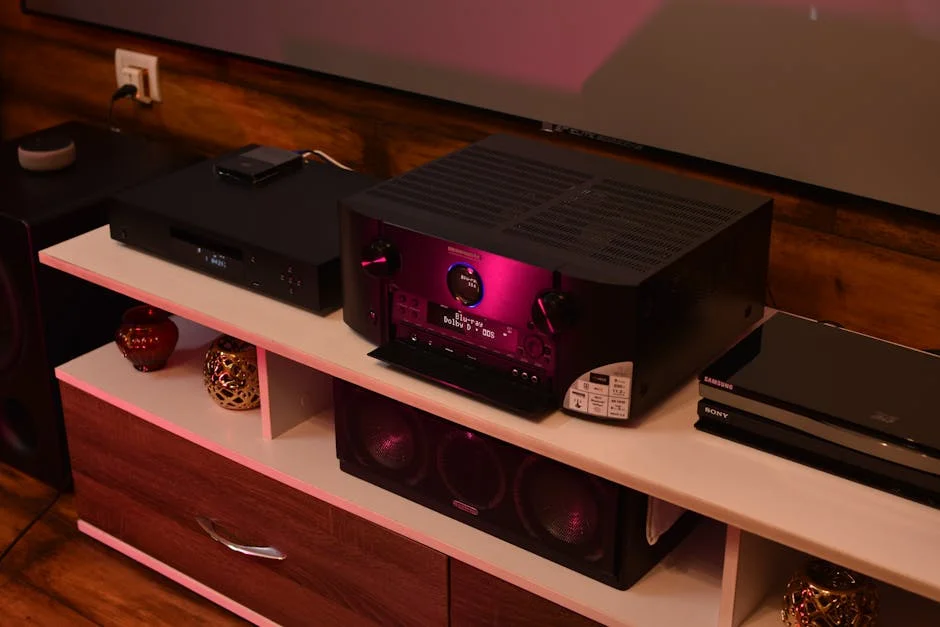
The Polk Signature Elite line targets buyers who want Hi-Res certified performance without stepping up to premium-tier pricing. These three speakers — two surround bookshelf pairs and a slim center channel — are built around the same driver family, which matters when you’re assembling a matched system for home theater. Reviewing them together reflects how most buyers will actually purchase them.
Owner reports and spec analysis suggest the Signature Elite series earns its place in mid-range home theater builds. The question isn’t whether they perform — they do — it’s whether they’re the right fit for your amplification, room size, and existing speaker chain. That’s what this review works through.
Quick Verdict
The Polk Signature Elite ES10, ES15, and ES35 form a coherent, well-matched speaker family for home theater builds in the mid-range tier. The ES10 and ES15 are both rear-bookshelf surround candidates; the ES35 is a slim center designed to sit below a display without dominating the cabinet. All three carry Hi-Res Audio certification, Dolby Atmos and DTS:X compatibility, and Polk’s Power Port bass technology. For buyers assembling a 5.1 or 7.1 surround system who need matched timbre across the soundstage, the Signature Elite family delivers a coherent solution. For those already running high-sensitivity fronts — Klipsch Heritage or Reference Premiere, for instance — there’s a sensitivity gap to weigh carefully before committing.
Key Specs
| Speaker | Drivers | Impedance | Sensitivity | Power Range | |, |, |, |, |, | | ES10 | 1” tweeter, 4” woofer | 8Ω | 87 dB | 20, 100W | | ES15 | 1” tweeter, 4” woofer | 8Ω | 87.5 dB | 20, 100W | | ES35 | 1” tweeter, (6) 3” woofers | 8Ω | 89 dB | 20, 125W |
All three present a nominal 8Ω load, making them compatible with virtually any AV receiver in the mid-range class. The ES35’s higher sensitivity is partly a function of its six-driver array; more radiating surface area moves more air with the same wattage input. The ES10 and ES15 share nearly identical sensitivity figures — the half-decibel difference is marginal in practice.
Performance
Surround Performance (ES10 and ES15)
The ES10 and ES15 share the same driver complement — a 1-inch tweeter paired with a 4-inch woofer — with the ES15 offering a slightly larger cabinet. That cabinet difference matters at the low end: the ES15’s Power Port bass extension gives it a perceptibly fuller bottom end in a larger room. Owner reports on AVS Forum consistently describe both speakers as clean, non-fatiguing surround performers, which matches what you’d expect from a bipole-adjacent design with controlled dispersion. Where the Klipsch RP-500M surround (used in my own chain) draws attention with its forward presentation, the Signature Elite surrounds are more diffuse — which some listeners prefer for immersive content.
At 87, 87.5 dB sensitivity, both speakers sit noticeably below the Klipsch Reference Premiere line (the RP-600M measures around 96 dB). That’s not a knock — most Polk buyers aren’t pairing these with Klipsch fronts — but it’s a real number to account for. An AV receiver channels typically deliver 80, 100W into 8Ω; the Signature Elite surrounds will play loud enough in most rooms. The concern is headroom uniformity across a matched system when mixing brands with different sensitivity profiles. Keep that in mind if you’re assembling a hybrid chain.
The Power Port technology deserves a brief note. Polk’s port design uses a tapered, flared geometry to reduce port noise and extend low-frequency output. Owner reviews consistently note the ES10 and ES15 sound fuller than their driver size suggests. That matches what port geometry achieves — less chuffing at the port exit, cleaner bass extension.
Center Channel Performance (ES35)
The Polk Signature Elite ES35 takes a different approach to center-channel design than most buyers expect. Six 3-inch woofers flanking a center 1-inch tweeter is an unusual configuration, but it produces a consistent horizontal dispersion pattern that holds dialogue intelligibility off-axis — important for wide seating rows or seats positioned at the edges of a room. Verified buyers frequently cite dialogue clarity as the ES35’s standout quality, which is the right priority for a home theater center.
The “slim” designation is accurate. The ES35 is designed for under-TV placement on a media console, or on a shelf above a fireplace where depth is a constraint. At 89 dB sensitivity, it’s marginally more efficient than the ES10/ES15 pair, which helps with level-matching across the soundstage. Dual Power Ports — one on each end of the cabinet — replace the single port of the bookshelf models, and owner feedback suggests this contributes to the fuller bass response relative to the speaker’s slim profile.
The primary trade-off is the driver array’s reliance on smaller woofers. Six 3-inch drivers don’t move the same air volume as two 5.25-inch or 6.5-inch drivers in a traditional center. For dialogue reproduction this isn’t a problem. For music content — or center-channel use in a stereo-bypass setup — the ES35 won’t have the midbass weight of a full-range bookshelf used as a center. That’s a design trade-off, not a defect.
Pros & Cons
ES10 Surrounds
- Clean, controlled dispersion suited to home theater immersive formats
- 8Ω nominal load compatible with any mid-range AV receiver
- Power Port bass extension adds fullness relative to driver size
- 87 dB sensitivity requires adequate receiver output — marginal with lower-powered AVRs
- Smaller cabinet limits low-frequency extension compared to ES15
ES15 Surrounds
- Slightly larger cabinet and Power Port delivers fuller bass than ES10
- Same driver complement as ES10 — matched timbre across a system using both
- Compatible with wide range of AV receivers at rated power
- Same 87.5 dB sensitivity constraint as ES10 applies
- Larger footprint may be awkward in tight surround placement
ES35 Center
- Six-driver array maintains dialogue intelligibility across wide seating rows
- Slim profile fits under most displays on a media console
- 89 dB sensitivity aids level-matching with the bookshelf pair
- Smaller woofers limit midbass weight for music content
- Six small woofers vs. fewer larger drivers is an unusual configuration that doesn’t suit every crossover setup
Who It’s For
The Polk Signature Elite family is built for buyers who want a matched, purpose-designed home theater speaker system in the mid-range tier. The natural buyer is assembling a 5.1 or 7.1 system using Polk fronts and towers — the ES20 or ES60, for instance — and needs surrounds and a center that share the same tonal character.
Buyers running high-sensitivity front speakers from Klipsch or Focal should measure carefully before mixing. The sensitivity gap between the Klipsch RP-600M (96 dB) and the Polk ES10 (87 dB) is nine decibels — a significant amplifier output discrepancy that’s difficult to manage through receiver-level trim alone, especially at reference listening levels.
For a buyer starting fresh — no existing speaker investment, mid-range budget, wants a matched system — the Signature Elite family is a strong foundation. The coherent timbre across the ES10, ES15, and ES35 is genuine. For a buyer retrofitting surrounds and a center into an existing high-sensitivity front chain, the math is harder.
Buying Guide
Sensitivity and Amplifier Power
Sensitivity is the spec most buyers overlook, and it matters more in home theater than in two-channel stereo. In a home theater context, your AV receiver shares its total amplifier section across five, seven, or nine channels simultaneously. A speaker that requires more output voltage to reach a given SPL draws more from that shared power budget. The Polk Signature Elite speakers measure in the 87, 89 dB range — workable, but not efficient by Klipsch or JBL standards. Pair them with an AV receiver rated at 80W per channel or better into 8Ω (not the inflated 2-channel figure many manufacturers publish), and they will perform at reference level in a medium-sized room.
Cabinet Size and Room Volume
The difference between the ES10 and ES15 is mostly cabinet volume. Larger cabinet volume allows longer port tuning, which extends bass response lower before roll-off. In a room under 1,500 cubic feet, the ES10 surround is adequate for 80Hz-crossover operation with a capable subwoofer handling everything below. In larger rooms — or for buyers running a higher crossover point because their subwoofer placement is awkward — the ES15 gives more headroom. Neither speaker is designed for full-range operation; both are intended to hand off below 80Hz to a dedicated sub.
Matching Across a Full System
A coherent soundstage depends on matched timbre across the speaker chain. Polk builds the Signature Elite family around a shared driver and crossover topology so that the tonal character of the ES35 center, ES10/ES15 surrounds, and the ES20/ES60 floor-standers is consistent. Mixing brands — Polk surrounds with Klipsch fronts, for example — introduces timbral discontinuities that are most audible on panning sound effects and wide orchestral passages. The speakers category is full of well-reviewed individual components; matching those components into a coherent chain is the harder problem, and it’s where buying a family makes practical sense.
Placement and Physical Fit
The ES35’s slim profile addresses a real-world constraint: most media consoles are 8, 12 inches deep, and full-size center channels with deep 6.5-inch woofers won’t fit. The ES35’s slim design fits on a shelf in front of a display or on a console under a screen without blocking the lower third of the image. For in-wall or on-wall surround placement, the ES10’s smaller footprint is easier to position on surround speaker brackets. Neither the ES10 nor the ES15 is a dipole or bipole design — they’re direct-radiating bookshelves, which means placement angle toward the primary listening position matters.
Hi-Res Audio Certification — What It Actually Means
All three speakers carry Hi-Res Audio certification, which requires frequency response extending to 40 kHz. For Dolby Atmos and DTS:X content — the primary use case here — this spec has no practical relevance. Neither format encodes audio above 20 kHz. The certification is a marketing signal; it’s not an indicator of home theater performance. What matters for surround and center channel performance is midrange clarity, off-axis response, and sensitivity. For deeper guidance on how those specs translate across different form factors, the full home theater speakers resource covers measurement methodology and what to prioritize by speaker role.
Frequently Asked Questions
How do the ES10 and ES15 differ, and which should I choose for surrounds?
The ES10 and ES15 share the same driver complement — a 1-inch tweeter and 4-inch woofer — with the ES15 offering a larger cabinet that extends bass output slightly. In rooms under roughly 1,500 cubic feet with a subwoofer handling the low end, the ES10 performs nearly identically. The ES15 is the better choice in larger rooms or if you’re running a higher crossover point. Both are 8Ω nominal and rated to 100W, so amplifier compatibility is identical.
Can I mix Polk Signature Elite surrounds with Klipsch Reference Premiere fronts?
Mixing these families introduces a sensitivity gap of roughly 8, 9 dB between Klipsch RP-series fronts (around 96 dB) and the Polk ES10/ES15 (87, 87.5 dB). AV receivers can compensate with per-channel level trim, but the shared amplifier section works harder to drive the Polks to matched levels. Most home theater setups handle this adequately, but buyers who listen at reference level or above in larger rooms may notice the discrepancy under demanding content. A matched Polk front-and-surround chain removes the variable entirely.
Is the ES35 a good center channel for a small room or apartment setup?
The ES35’s slim profile makes it a practical choice when display clearance is limited, and its six-driver array maintains dialogue clarity across typical seating widths. In a smaller room — say, under 1,200 cubic feet — it performs well for home theater use. The smaller 3-inch woofers limit low-frequency output compared to traditional center channels with 5.25-inch or 6.5-inch drivers, so running an 80Hz crossover with a capable subwoofer is the right configuration. For music content as a center-fill speaker, a conventional bookshelf used on its side may suit better.
What AV receiver power rating do these speakers actually need?
Polk rates all three speakers at 20, 125W (ES35) or 20, 100W (ES10/ES15) into 8Ω. At 87, 89 dB sensitivity, they benefit from receivers that deliver their rated power cleanly — 80W per channel into 8Ω is a practical floor for reference-level listening in a medium room. Denon, Marantz, and Yamaha mid-range receivers (the X3000 series tier and equivalents) pair well. Avoid underpowered receivers under 50W per channel if you run these at higher volumes; distortion from clipping damages drivers faster than clean power at rated output.
Do these speakers work for Dolby Atmos height channels in addition to surround duties?
The ES10 and ES15 are marketed as Atmos-compatible, but that designation primarily means they can reproduce the Atmos audio format — not that they’re optimized for overhead placement. For dedicated Atmos height channels, in-ceiling speakers like the Klipsch CDT-3650-C II or equivalent in-ceiling designs are preferable because they direct sound downward from the ceiling plane. On-ceiling upward-firing Atmos modules or in-ceiling speakers handle height bed more convincingly than bookshelves mounted high on a wall. The ES10 and ES15 are best deployed as side surrounds or rear surrounds in a conventional 5.1 or 7.1 layout.
Polk Signature Elite ES10 Surround Sound Speakers - Hi-Res Audio Certified, Dolby Atmos & DTS:X Compatible, 1" Tweeter & 4" Woofer, Power Port Technology for Bass (Pair, Stunning Black): Pros & Cons
Where to Buy
Polk Signature Elite ES10 Surround Sound Speakers - Hi-Res Audio Certified, Dolby Atmos & DTS:X Compatible, 1" Tweeter & 4" Woofer, Power Port Technology for Bass (Pair, Stunning Black)See Polk Signature Elite ES10 Surround So… on Amazon