Cinemascope vs 16:9: Key Differences for Home Theater
Affiliate disclosure: Some links on this page are affiliate links. If you buy through them we earn a small commission at no extra cost to you. Recommendations are research-driven; we don't claim personal use of every product reviewed. Product prices and availability are accurate as of the date published and are subject to change. Always check Amazon for current pricing before purchasing. Learn more.
Aspect ratio shapes every decision that follows — screen size, throw distance, masking, and how much of the image actually reaches you. Cinemascope runs at 2.39:1, roughly half again as wide as the 16:9 frame most projectors and screens are built around. That gap matters more than most buyers realize before they commit to hardware. For a full orientation on how these variables connect, the Screens & Displays hub is the right starting point.
These two formats aren’t interchangeable, and the gear choices they push you toward are meaningfully different. What follows is a direct comparison of both aspects — and of five physical products that illuminate exactly how the format question plays out in practice.
Side-by-Side
| | CinemaScope (2.39:1) | 16:9 (1.78:1) | |, |, |, | | Native screen shape | Ultra-wide | Standard widescreen | | Black bar behavior on 16:9 screen | Horizontal bars top and bottom | None | | Wasted screen area on 16:9 | ~25% | 0% | | Native projector compatibility | Requires lens memory or anamorphic | Full native support | | Theatrical film library fit | Most feature films post-1955 | TV, streaming, gaming | | Screen material recommendation | Matte white or ALR | Matte white or ALR | | Vertical height per inch of diagonal | Less | More |
Key Differences
What the aspect ratio actually controls
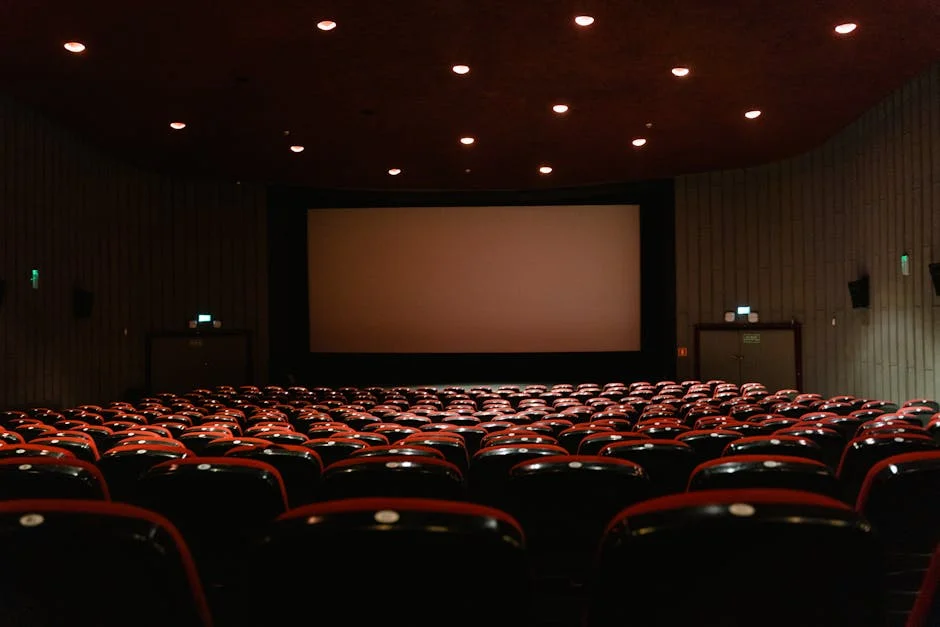
The ratio describes how wide the image is relative to its height. A 16:9 image at 120 inches diagonal is 104.6 inches wide and 58.8 inches tall. The same diagonal in 2.39:1 CinemaScope is 111.3 inches wide but only 46.6 inches tall. That 12-inch height difference is substantial. On a fixed 16:9 screen, CinemaScope content fills the width and leaves horizontal black bars above and below — the image itself is smaller than what the screen can deliver.
The black bar problem, stated plainly
Projecting CinemaScope content onto a 16:9 screen doesn’t clip the image — it scales it to fit within the 16:9 frame, shrinking the active picture area. A 120-inch 16:9 screen showing a 2.39:1 film delivers an image that’s effectively around 100 inches diagonal. Owners who want full-screen CinemaScope have two options: an anamorphic lens with lens memory (expensive and mechanically complex), or a 2.39:1 native screen with constant-height projection. Neither is a beginner setup.
Where these formats actually live
16:9 dominates streaming, gaming, sports, and broadcast television. CinemaScope dominates theatrically released feature films — anything shot for a wide theatrical release from the mid-1950s forward is likely framed in a 2.39:1 or similar ultra-wide ratio. A home theater built around film will spend most of its time in CinemaScope territory. A room used for gaming and streaming will live in 16:9.
Screen material and the format decision
Format interacts with screen material in ways worth understanding before purchase. Matte white screens have wide viewing cones — typically 160 degrees or more — and gain values near 1.0, which makes them format-agnostic. ALR screens reject ambient light from angles other than the projector throw angle, but require the projector positioned near viewer eye level, and gain values (often 0.6, 0.8 for front-projection ALR) need to be matched against projector brightness specs. CLR screens are designed specifically for ultra-short-throw projectors and are not appropriate for standard or long-throw setups. The format you’re projecting doesn’t change the material physics, but it does change how much of the screen’s active surface you’re using — and a high-gain ALR screen showing CinemaScope with heavy black bars is wasting a significant portion of the surface area you paid for.
Top Picks
Eyes Wide Shut (The Criterion Collection) [4K UHD]
Eyes Wide Shut (The Criterion Collection) [4K UHD] is framed at 1.33:1 — full-frame Academy ratio, which Kubrick specified for home viewing. That’s a narrower, taller image than both 16:9 and CinemaScope, and it creates its own compatibility consideration. On a standard 16:9 screen, you’ll see vertical pillarboxing on both sides. The active image is tall and relatively narrow, which actually suits close-up portraiture better than wide-field compositions.
The Criterion 4K transfer is sourced from the original camera negative. Owner reports across AV forums consistently note strong shadow detail and accurate skin tones — the film’s candlelit palette rewards high-contrast projection. For a 16:9 screen, this one is best enjoyed at larger throw distances where the pillarboxed image still reaches a comfortable size. On a 120-inch 16:9 screen, the active image lands around 90 inches tall — taller than most viewers sitting close expect.
This disc belongs in the library of anyone building a serious film collection. The aspect ratio conversation is secondary to the source quality. Verified buyers on Criterion-focused forums note the HDR grading as conservative and faithful — correct for the source, not flashy for its own sake.
Check current price on Amazon.
150”-Projector-Screen-with-Stand,HUANYINGBJB Outdoor Projection Screen
The 150”-Projector-Screen-with-Stand,HUANYINGBJB Outdoor Projection Screen is a portable matte white screen with a gain of approximately 1.0, 1.2 and a wide viewing cone, making it format-flexible. At 150 inches diagonal in 16:9, the active image area is substantial — 130.7 inches wide by 73.5 inches tall. It supports both front and rear projection, which is the primary functional advantage for outdoor or multi-setup use.
Matte white at this gain level requires a projector with meaningful lumen output, particularly outdoors where ambient light is uncontrolled. The 150-inch size is most usable at dusk and into the night. Owner reviews consistently flag the stand as functional rather than premium — it supports the screen but requires careful leveling on uneven ground. For outdoor movie nights, the format conversation simplifies: project whatever the source is, and the screen handles both CinemaScope and 16:9 content without any specialized setup.
The carry bag and stand assembly make this genuinely portable. The matte white material doesn’t favor ALR-style ambient light rejection, so environment control — or darkness — is the actual solution for outdoor use. Throw distance compatibility is broad given the screen accepts standard front-projection; a projector at 15, 20 feet can fill this screen at most throw ratios.
Check current price on Amazon.
Videodrome (The Criterion Collection) [4K UHD]
Videodrome (The Criterion Collection) [4K UHD] is framed at 1.78:1 — essentially native 16:9, which makes it technically the smoothest fit for a standard home projector and screen setup. No pillarboxing, no letterboxing. The entire screen surface fills with active image.
Cronenberg shot Videodrome to be uncomfortable and close — the compositions favor the 16:9 frame more naturally than you’d expect from a 1983 release. The Criterion 4K restoration, based on the original camera negative, has drawn consistent praise from owners for its grain retention and accurate color rendering. Community consensus on AV forums points to this as a reference disc for evaluating how a projector handles analog film grain structure at 4K — it’s a more technically demanding test than most modern shoots.
For buyers building a library to evaluate display performance, this disc belongs on the short list. The full 16:9 coverage means every inch of the screen is working.
Check current price on Amazon.
Cinema Paradiso (Special Edition) [4K UHD + Blu-ray]
Cinema Paradiso (Special Edition) [4K UHD + Blu-ray] presents in 1.85:1 — close to 16:9, with narrow horizontal bars on a 16:9 screen. The bars are unobtrusive enough that most owners don’t notice them as an issue. This is a region-free release, which matters for international buyers, but is irrelevant to the format question.
The 4K restoration of the Tornatore film is notable for its warmth — the visual style is heavily influenced by natural light sources, and the HDR grading in this transfer supports highlight preservation in candle and flame sequences that Blu-ray versions struggled with. Verified buyers consistently note the included Blu-ray as a useful comparison tool. For a home theater oriented toward foreign and arthouse film, this represents the kind of source material that defines what the system is for.
The 1.85:1 framing means this projects cleanly on a standard 16:9 setup. Throw distance and screen size compatibility follow standard 16:9 guidelines — no specialized configuration required.
Check current price on Amazon.
This is Cinerama — 2017 Authorized Restoration (Flicker Alley)
This is Cinerama — 2017 Authorized Restoration (Flicker Alley) is framed in an aspect ratio that exceeds standard CinemaScope — the original Cinerama format was captured on three synchronized 35mm cameras and projected across a deeply curved screen at approximately 2.59:1 or wider. The Flicker Alley Blu-ray preserves the three-panel structure, including the visible seams, as part of the historical record.
This is not a disc for evaluating your screen’s performance — it’s a disc for understanding where CinemaScope came from and why it matters. The three-panel format was the direct commercial and technical predecessor to anamorphic widescreen. Owner consensus on forum threads dealing with film history and home theater intersects here: this release is a document, not a reference calibration source. The visual seams, color inconsistencies between panels, and spherical distortion are features, not defects.
On a standard 16:9 screen, significant black bars appear at the top and bottom. The case for owning this is cinematic literacy, not display optimization. For buyers interested in how screen format history shapes modern home theater decisions, the full Screens & Displays coverage connects those threads.
Check current price on Amazon.
Buying Guide
Matching your screen format to your primary content
Before buying a screen, audit two weeks of your actual watch history. If the majority is streaming — Netflix, Max, Hulu — and gaming, the content is overwhelmingly 16:9. A 16:9 screen is the correct purchase. If theatrical film is the primary use, most of what you watch will project with black bars on a 16:9 screen, and the effective image size will always be smaller than the screen diagonal suggests.
The buying decision for format-aware viewers comes down to how much you’re willing to invest in constant-height CinemaScope solutions versus accepting the practical reality that a 16:9 screen with a good projector covers the broadest content range.
Screen material and projector placement
Matte white screens at 1.0 gain work with any projector positioned at standard throw distances — typically 1.0x to 2.5x the screen width. They’re format-agnostic and placement-flexible. ALR screens require the projector positioned at or near viewer eye level to achieve the ambient light rejection they’re designed for; off-axis placement reduces their effectiveness significantly. CLR screens are exclusively for ultra-short-throw projectors — a standard long-throw unit will create a hotspot rather than a uniform image.
Screen gain should match projector lumen output. A 150-inch screen at 1.0 gain needs more lumens to achieve the same nit level as a 120-inch screen at the same gain. For outdoor use, any ambient light condition before full darkness requires substantial projector brightness regardless of gain.
Throw distance and screen size
Screen size and throw distance are linked by each projector’s throw ratio. A 1.5 throw ratio projector placed 15 feet from the screen can fill approximately a 120-inch 16:9 screen. Moving to 150 inches requires either more distance or a lower throw ratio lens. The Screens & Displays resources include throw distance calculators and format-specific sizing guides that make this calculation straightforward.
Confirm throw ratio compatibility before purchasing a screen. A screen that’s too large for your room’s throw distance isn’t fixable without changing the projector or moving a wall.
Fixed frame vs. portable screens
Fixed-frame screens deliver flat, tensioned surfaces and are the correct choice for a dedicated room. Portable screens — including stand-based outdoor options — introduce wrinkle and tension variation that’s visible in the image at moderate throw distances. For dedicated home theater use, fixed frame at the correct size for the room beats portable every time. For outdoor or multi-location use, portable screens remain the practical solution and the format trade-off is acceptable.
The disc library and the screen investment
Screen investment should follow library direction. A viewer building a catalog of theatrical films — Criterion, Flicker Alley, studio archive releases — is committing to material that’s predominantly non-16:9. That library justifies thinking harder about CinemaScope-optimized setups. A viewer whose library is predominantly streaming and gaming can optimize for 16:9 and project film content with the black bars as an acceptable trade-off. Neither approach is wrong; they serve different uses.
Who Should Buy Which
Buy a 16:9 screen if streaming and gaming are your primary use cases, your projector is a standard 16:9 model without anamorphic lens support, and you want the simplest setup path. Nearly all modern projectors are built around 16:9 natively.
Invest in a CinemaScope or constant-height setup if your library is film-centered, you’re regularly watching 2.39:1 content, and you’re willing to deal with the additional complexity — lens memory, masking, or a natively wide screen — to eliminate black bars on theatrical releases.
For outdoor and portable use, the portable 16:9 matte white screen is the correct category. Format nuance matters less when setup time, ambient light, and audience size are the controlling variables.
Verdict
16:9 is the practical default for most buyers, and it’s the correct starting point. The format covers streaming, gaming, sports, and most casual film viewing without any configuration overhead. Where the format argument shifts is for buyers whose primary activity is theatrical film — and for those buyers, the disc library is the real guide. Criterion and Flicker Alley releases span 1.33:1 to Cinerama-era ultra-wide formats, and projecting that catalog on a 16:9 screen consistently sacrifices image area.
The screen decision should be made before the projector purchase, not after. A projector chosen first tends to dictate a 16:9 screen by default — and for film-centered viewers, that default works against the content. Match the screen to the library, verify throw distance before committing to size, and don’t treat the screen as an accessory to the projector. The image quality ceiling is set by the weakest link, and the screen is more often that link than buyers expect.
Frequently Asked Questions
Does CinemaScope content always show black bars on a 16:9 screen?
Yes, unless you’re using an anamorphic lens with lens memory or a constant-height CinemaScope screen setup. On a standard 16:9 screen, 2.39:1 content scales to fit the width, leaving horizontal black bars at the top and bottom. The active image area is roughly 25 percent smaller than the full screen diagonal suggests. No software or firmware setting eliminates this without stretching the image and distorting the aspect ratio.
Is the HUANYINGBJB 150-inch screen suitable for a dedicated home theater room?
Portable stand-based screens like this one are designed for outdoor and occasional-use scenarios, not dedicated rooms. The screen material and stand tensioning are functional outdoors but introduce surface irregularities visible at closer viewing distances. For a dedicated room, a fixed-frame screen at the appropriate size provides better image flatness, more consistent gain across the surface, and a more stable installation. The 150-inch portable works well for its intended use case; the room use case calls for a different product category.
What aspect ratio are most Criterion Collection 4K releases?
It varies by title and director preference. The Cinema Paradiso Special Edition is 1.85:1. Eyes Wide Shut is 1.33:1 per Kubrick’s specification. Videodrome is 1.78:1. Criterion respects the original theatrical framing, which means their catalog spans multiple aspect ratios. Check the individual title’s specs before assuming 16:9 compatibility.
Can ALR screens handle CinemaScope content well?
The screen material itself handles any aspect ratio without issue — ALR is a material property, not a format restriction. The practical consideration is that ALR screens require projector placement near viewer eye level for the ambient light rejection to function correctly. If the projector is ceiling-mounted and the screen is not specifically designed for that geometry, gain uniformity degrades off-axis. Matte white screens are more placement-forgiving for mixed-format setups.
How does throw distance change with screen size when moving from 120 to 150 inches?
Throw distance scales proportionally with screen size at a fixed throw ratio. A projector with a 1.5 throw ratio that fills a 120-inch 16:9 screen at 13.1 feet needs roughly 16.3 feet to fill a 150-inch screen at the same ratio. Measure your room’s available throw distance first, then calculate the maximum screen size your projector can fill at that distance. Buying the screen before confirming throw distance compatibility is the most common setup mistake in this category.
Where to Buy
Eyes Wide Shut (The Criterion Collection) [4K UHD]See Eyes Wide Shut (The Criterion Collect… on Amazon