Sony VPL-XW5000ES Review: Premium 4K Laser Projector Tested
Affiliate disclosure: Some links on this page are affiliate links. If you buy through them we earn a small commission at no extra cost to you. Recommendations are research-driven; we don't claim personal use of every product reviewed. Product prices and availability are accurate as of the date published and are subject to change. Always check Amazon for current pricing before purchasing. Learn more.
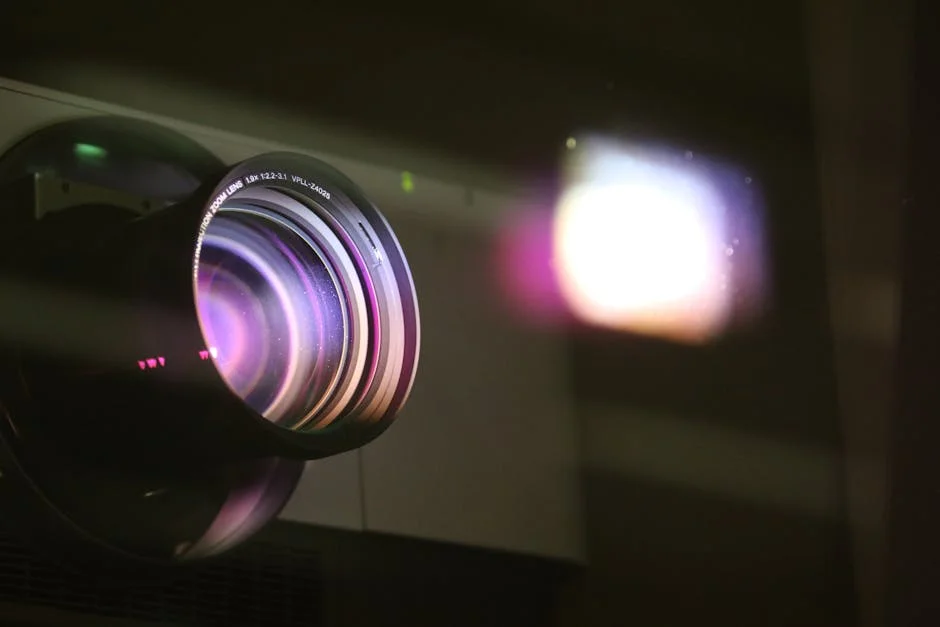
The Sony VPL-XW5000ES sits in a tier most home theater builders treat as aspirational — native 4K SXRD, laser phosphor light source, and HDR performance that closes the gap to reference-grade display gear. It also sits well above the entry and mid-range projectors that most hobbyists, including builders running an Epson 4010 or similar LCD unit, use as their daily driver.
The question worth answering is whether the gap in image quality justifies the gap in tier. Projector Central and Projector Reviews have published detailed measurements on the XW5000ES; the analysis below draws on those sources, Sony’s published specifications, and owner field reports from AVS Forum threads where long-term users have logged real-world results.
Quick Verdict
The XW5000ES is a legitimate step up from enhanced 4K LCD projectors. Native 4K SXRD delivers measurably better pixel structure and motion rendition than pixel-shifting designs. The laser phosphor light source is rated at 20,000 hours — a fundamentally different longevity proposition than a lamp-based unit. Sony’s X1 Ultimate for Projector processor handles HDR tone mapping with more sophistication than most entry-level engines.
Owner consensus on AVS Forum is consistent: out-of-box calibration is close, HDR performance is strong on well-mastered discs, and blacks are noticeably deeper than the Epson 4010 class. The trade-off is price tier — this is premium territory, not a lateral upgrade from a budget LCD.
For builders who have already optimized their room, screen, and speaker chain and are ready for the display to be the constraint, the XW5000ES makes a strong case. For builders still running a bare screen or an uncalibrated receiver, that investment will return less than it should.
Key Specs
- Resolution: Native 4K (4096 × 2160 SXRD panel)
- Light source: Laser phosphor, rated 20,000 hours at standard brightness
- Brightness: 2,000 ANSI lumens
- Contrast: Up to 200,000:1 (dynamic iris engaged)
- HDR support: HDR10, HLG; auto HDR tone mapping
- Throw ratio: 1.35, 2.84:1
- Lens shift: Vertical ±85%, Horizontal ±31%
- Zoom: 2.1x optical
- Connections: 2× HDMI 2.0 (HDCP 2.3), RS-232C, USB
- Dimensions: 19.7 × 8.9 × 17.7 in, approximately 26.5 lbs
- Color space: 100% DCI-P3 (per Sony spec)
The HDMI 2.0 ports are a documented limitation. 4K/120Hz and full-bandwidth 4K/60Hz HDR signals require HDMI 2.1, which the XW5000ES does not have. Most Blu-ray and streaming sources at standard 4K/24Hz or 4K/60Hz will operate without issue, but builders planning to feed gaming sources at 4K/120Hz need to account for that ceiling.
Throw ratio range of 1.35, 2.84:1 gives meaningful flexibility. In a 14×18 ft room with the projector ceiling-mounted at the rear, throw distances in the 13, 16 ft range will cover screen sizes from 100 to 130 inches comfortably — use Projector Central’s throw distance calculator to confirm the math for your specific room geometry before purchasing.
Performance
Picture Quality and Calibration
Native 4K SXRD produces a noticeably sharper image than pixel-shifting designs at equivalent screen sizes. The difference is most visible on static fine detail — text, star fields, fine texture on close-up faces. Motion also benefits from the native panel structure; there is no pixel-shift lag to manage.
Sony’s X1 Ultimate for Projector processor handles HDR tone mapping via an auto mode that adjusts frame-by-frame. Projector Central’s measurements place the XW5000ES at approximately 1,800 nits peak in its brightest mode, with the Cinema Film modes measuring closer to 1,200, 1,400 nits sustained. For HDR10 content mastered at 1,000, 4,000 nits, those numbers are sufficient for impactful specular highlights. They are not reference-grade HDR in the sense of full-brightness, large-area HDR — that requires laser array or more expensive laser phosphor designs.
Black levels are one of the genuine strengths cited across AVS Forum owner threads. The dynamic iris contributes to the 200,000:1 dynamic contrast figure, but native contrast — measured without iris — is competitive in its class. Dark scenes in Blade Runner 2049 and similar reference discs draw consistent praise from long-term owners.
Out-of-box calibration lands close on most modes. Projector Reviews reports the Cinema Film 2 mode as the most accurate starting point, with measured grayscale errors that fall within calibration range without professional intervention. Owners running Calman or similar tools report reaching near-reference accuracy with modest adjustments.
Laser Light Source and Longevity
The shift from lamp to laser phosphor changes the ownership calculation materially. A lamp-based unit at this usage level — two to three hours per night, a few nights per week — typically requires a lamp replacement within three to four years. Lamp cost, brightness degradation over the lamp lifecycle, and color shift are recurring maintenance factors.
The XW5000ES at 20,000 hours rated life essentially eliminates that cycle for the foreseeable ownership window. Brightness does degrade gradually over laser lifetime, but the curve is far flatter than lamp decline in the first few thousand hours. Owner reports past the 3,000-hour mark on earlier Sony SXRD laser units describe brightness that remains visually consistent with initial measurements.
Laser also eliminates warm-up delay. The XW5000ES reaches full brightness in under ten seconds. For households where the projector turns on and off frequently — movie nights with kids, casual viewing mixed with full-length films — that convenience is genuinely valued by owners.
Lens and Placement Flexibility
The 2.1x optical zoom and wide lens shift range give the XW5000ES real installation flexibility. Vertical lens shift of ±85% and horizontal shift of ±31% means the projector can be ceiling-mounted, shelf-mounted, or placed on a rear shelf and still achieve a properly aligned image without keystone correction. Keystone should not be used on a projector at this price tier — optical alignment is the right approach, and the lens specification supports it.
For rooms with unusual geometry — low ceilings, off-center mounting positions, or non-standard throw distances — the flexibility here matters. The alternative is digital keystone, which costs resolution. The XW5000ES gives enough range to avoid that trade-off in most room configurations.
Top Picks
Sony VPL-XW5000ES 4K HDR Laser Home Theater Projector
The Sony VPL-XW5000ES 4K HDR Laser Home Theater Projector is the reference point for this tier. Native 4K SXRD at 2,000 ANSI lumens with a 20,000-hour laser phosphor light source represents a fundamentally different engineering spec than the LCD pixel-shifting designs that dominate the sub-premium market. The Epson 4010, which runs a 4K-enhanced LCD panel at similar lumen output, is a capable projector — but the pixel structure, motion performance, and black levels on the XW5000ES are in a different class by owner consensus and by Projector Central’s published measurements.
HDR tone mapping via the X1 Ultimate processor is the other meaningful differentiator. Auto HDR mode adjusts per-scene, and the results on well-mastered UHD Blu-ray content are noticeably better than static tone mapping implementations common in lower-tier units. Streaming sources benefit less, as HDR metadata quality varies substantially by platform and content — Sony’s processor cannot fix upstream mastering decisions.
The HDMI 2.0 limitation is the most common owner complaint in AVS Forum threads. For a projector at this tier, in a year where HDMI 2.1 is standard on receivers and gaming consoles, the two HDMI 2.0 ports feel like an engineering compromise the price tier doesn’t warrant. Builders whose source chain is UHD Blu-ray and 4K streaming will not hit this ceiling. Builders planning to feed a PS5 or Xbox Series X at 4K/120Hz will.
Check current price on Amazon.
Sony VPL-XW5000ES 4K HDR Laser Home Theater Projector (Renewed)
The Sony VPL-XW5000ES Renewed is the same SXRD panel, X1 Ultimate processor, and laser phosphor light source as the new unit — sourced through Amazon’s certified renewed program, inspected, and sold with a 90-day Amazon Renewed Guarantee.
The calculus on renewed laser projectors is different from renewed lamp-based units. With a lamp projector, “renewed” always raises the question of how many hours remain on the current lamp and what condition the optical path is in after that use. With a laser unit rated at 20,000 hours, a renewed unit that has seen, say, 500, 1,000 hours of previous use still has the substantial majority of its rated life ahead. The brightness degradation over that range is marginal. That changes the risk profile meaningfully.
Owner reports on Amazon renewed laser projectors at this tier are mixed — not on the units themselves, but on the variance in cosmetic condition and the adequacy of the 90-day guarantee window for a premium purchase. The 90-day coverage is shorter than the standard Sony warranty on new units. Buyers who are comfortable with the coverage terms and who have verified the unit’s hours through Sony’s diagnostic menu are getting a meaningfully reduced price on the same imaging hardware.
Check current price on Amazon.
Projector Ceiling Mount Compatible with Sony VPL-XW5000ES
The Projector Ceiling Mount Compatible with Sony VPL-XW5000ES XW6000ES XW7000ES is a 5-inch extension mount designed specifically for the XW5000ES form factor. At 26.5 lbs, the XW5000ES is a substantial projector — universal mounts sized for lighter units are not an appropriate fit, and ceiling mounting a projector this heavy on an undersized bracket is a safety issue, not just a stability issue.
The XW5000ES’s wide lens shift range does most of the alignment work optically once the mount is set at the correct height and horizontal position. The 5-inch extension variant is well-suited to standard 9-ft ceilings targeting a 100, 120-inch screen at typical rear-of-room throw distances. Builders with lower ceilings or non-standard mounting positions should confirm the extension length against Projector Central’s throw calculator before ordering — a 5-inch extension is not universal, and the lens shift range handles most but not all edge cases.
Verified buyer reports note solid construction and compatibility with the XW5000ES mounting pattern. The installation process for a first-time ceiling mount is the area that generates the most variance in reviews — the mount itself is straightforward, but running in-ceiling HDMI cable cleanly requires planning the route before the bracket goes up. Getting that sequence wrong is recoverable, but it adds work.
Check current price on Amazon.
Pros & Cons
Sony VPL-XW5000ES (New)
- Native 4K SXRD — not pixel-shifted, genuine 4K pixel structure
- Laser phosphor rated at 20,000 hours — no lamp replacement cycle
- X1 Ultimate HDR tone mapping — owner-reported results on UHD Blu-ray are strong
- Wide lens shift and 2.1x optical zoom — real placement flexibility without keystone
- HDMI 2.0 only — no 4K/120Hz, a genuine limitation for gaming-forward setups
- 2,000 lumens — adequate in a dark room, not a high-ambient-light performer
- Size and weight — 26.5 lbs requires appropriate ceiling mount and structural planning
Sony VPL-XW5000ES (Renewed)
- Same imaging hardware at a reduced price tier
- Laser longevity largely unaffected by prior use within normal hour ranges
- 90-day Amazon Renewed Guarantee — shorter coverage than new-unit Sony warranty
- Cosmetic condition and prior-use hours vary; verification through Sony diagnostics is recommended
Buying Guide
Native 4K vs. Enhanced 4K — Why It Matters at This Screen Size
Most projectors in the sub-premium tier, including the Epson 4010 and its competitors, use pixel-shifting to produce a 4K-equivalent image from a lower-resolution panel. The result is a genuine improvement over 1080p, but it is not the same as projecting from a panel where every pixel in a 3840×2160 or 4096×2160 array is a discrete imaging element.
At screen sizes of 100 inches and above, the pixel structure difference becomes visible under direct scrutiny. Motion sharpness — where pixel-shift designs must manage the mechanical or optical shift between frames — is the other area where native panels maintain an edge. For builders targeting 110, 130-inch screens at normal viewing distances, native 4K is the more appropriate spec.
The full range of projectors available at each resolution tier is worth reviewing before committing — the native 4K category includes units at several price tiers and with different panel technologies.
Laser vs. Lamp — The Ownership Math
A 20,000-hour laser rating changes how the total cost of ownership is calculated. Lamp projectors in heavy household use typically require replacement lamps within two to four years. Over a decade of ownership, that recurring cost compounds.
Laser also changes the brightness consistency story. Lamp brightness degrades steadily from first use, with the most aggressive drop in the first few hundred hours. Laser degradation is gradual and largely imperceptible over normal ownership periods. Owners who calibrate their projector at purchase and recalibrate annually will find laser maintains its measured targets far longer.
The practical takeaway: for a primary home theater projector that will run regularly for years, laser is not a luxury feature — it is an investment in consistent performance and reduced maintenance.
HDR Performance — Managing Expectations Honestly
The XW5000ES handles HDR10 well on well-mastered content. It does not produce the full-field peak brightness of laser array designs, and owners who arrive expecting reference-monitor HDR will find the results impressive but not equivalent to what Projector Central’s measurements show on K+ units.
The most common owner feedback pattern on AVS Forum is calibrated satisfaction: HDR specular highlights are impactful, dark scenes are convincing, and the auto tone mapping handles the most demanding discs better than static implementations. Managing the expectation that this is a laser projector with strong HDR — not a reference HDR display — leads to a more accurate purchase decision.
Screen Pairing — The Overlooked Variable
The screen matters as much as the projector. An average projector on an excellent screen looks better than an excellent projector on a basic screen. Most builders get this backwards because the projector is the prominent purchase and the screen feels like an accessory. It is not.
The XW5000ES at 2,000 lumens pairs well with a high-gain or unity-gain screen in a room with good light control. ALR screens are an option for environments with residual ambient light, but the XW5000ES’s black levels benefit most from a dark-room setup with a neutral-gain screen. Projector Central’s screen pairing guidance and AVS Forum’s screen recommendation threads are the right starting point for this decision — confirming screen gain, viewing angle, and surface material before purchase prevents the most common post-installation regrets.
Room Geometry and Throw Distance Planning
Confirm throw distance before any ceiling mount goes up. The XW5000ES’s 1.35, 2.84:1 throw ratio gives meaningful range, but the 5-inch extension mount, ceiling height, and target screen size need to be verified together as a system.
Use Projector Central’s throw distance calculator with the XW5000ES’s specific lens data. Input your room dimensions, ceiling height, and target screen size, and confirm the extension length before ordering any mounting hardware. A 5-inch extension is the correct match for most standard 9-ft ceiling configurations with a 100, 120-inch screen at rear-of-room placement, but edge cases exist and are easier to solve before installation than after.
Who It’s For
The XW5000ES is the right projector for a builder who has already addressed the fundamentals — room light control, screen surface, seating geometry, and audio calibration — and is ready for the display hardware to be the limiting factor.
It is not the right first projector for a room still running a basic screen, ambient light that isn’t controlled, or a receiver that hasn’t been calibrated. Those variables return more value per dollar invested than moving up projector tiers. The XW5000ES’s native 4K and laser advantages are most visible in a room that has been set up to let them show.
For Epson 4010 owners who have reached the ceiling of what LCD pixel-shifting can deliver and want to understand what native SXRD looks like, the XW5000ES is a meaningful upgrade. Projector Central and Projector Reviews remain the authoritative sources for measurement-based comparisons at this tier and above. For the full landscape of projector options at each price point, the home theater projector hub covers the broader category.
Frequently Asked Questions
How does the Sony VPL-XW5000ES compare to the Epson 4010 for a dark home theater room?
The XW5000ES delivers native 4K SXRD pixel structure versus the Epson 4010’s pixel-shifted LCD output, and the difference is visible at 110 inches and above — particularly in motion sharpness and black depth. The XW5000ES also carries a 20,000-hour laser light source against the Epson’s lamp, which changes the long-term maintenance picture substantially. Owner consensus on AVS Forum places the XW5000ES in a clearly higher performance class, with the gap most apparent on premium UHD Blu-ray content in a controlled dark room.
Is the HDMI 2.0 limitation a real problem for most home theater setups?
For setups built around UHD Blu-ray playback and 4K streaming at 24Hz or 60Hz, the HDMI 2.0 ports present no practical limitation — those signals fall well within HDMI 2.0 bandwidth. The constraint becomes real for builders planning to run a PS5 or Xbox Series X at 4K/120Hz, where HDMI 2.1 is required. Most dedicated home theater users whose primary sources are disc-based or streaming will not encounter the ceiling, but gaming-forward setups should consider it a genuine spec gap.
How long does the laser light source actually last in typical home theater use?
Sony rates the XW5000ES laser at 20,000 hours at standard brightness settings. At two to three hours of use per day, five days per week — a heavy household pattern — that represents roughly 25 years of rated life. Brightness does degrade gradually over time, but the curve is significantly flatter than lamp-based units, and owner reports on earlier Sony SXRD laser projectors past 3,000 hours describe brightness that remains consistent with initial measurements. Verified performance data at scale comes from Projector Reviews’ long-term ownership coverage.
Is the renewed version of the XW5000ES worth considering over a new unit?
The renewed unit carries the same SXRD panel and laser hardware, and for a laser projector with 20,000 hours of rated life, prior use of several hundred to a thousand hours represents a modest reduction in remaining life. The primary risk variables are cosmetic condition, unknown usage hours, and the shorter 90-day Amazon Renewed Guarantee versus Sony’s standard new-unit warranty. Buyers comfortable with those terms and willing to verify hours through Sony’s service menu can access the same imaging hardware at a lower price tier.
What screen gain and surface type pairs best with the XW5000ES in a dark room?
In a room with full light control, unity-gain or slightly below-unity matte white screens are the standard recommendation for a projector in this lumen and black-level class. Higher-gain screens increase perceived brightness but narrow viewing angle and can emphasize hot-spotting. ALR screens are better suited to high-ambient-light environments and can mute the XW5000ES’s native contrast performance. AVS Forum’s screen recommendation threads and Projector Central’s screen pairing guides are the most reliable resources for matching screen surface to this specific projector’s output profile.
Sony VPL-XW5000ES 4K HDR Laser Home Theater Projector with Native 4K SXRD Panel, Black: Pros & Cons
Where to Buy
Sony VPL-XW5000ES 4K HDR Laser Home Theater Projector with Native 4K SXRD Panel, BlackSee Sony VPL-XW5000ES 4K HDR Laser Home T… on Amazon