ALR vs White Screen: Which Projection Surface Wins
Affiliate disclosure: Some links on this page are affiliate links. If you buy through them we earn a small commission at no extra cost to you. Recommendations are research-driven; we don't claim personal use of every product reviewed. Product prices and availability are accurate as of the date published and are subject to change. Always check Amazon for current pricing before purchasing. Learn more.
The screen is the surface everything lands on — and the material it’s made from shapes every image your projector throws. Most buyers research projector brightness and resolution obsessively, then treat the screen as an afterthought. That’s backwards. An average projector on a quality ALR or white screen will outperform an excellent projector on a cheap matte surface in almost any lighting condition.
This comparison covers five projection screens from the Screens & Displays category — two CLR/ALR options built for ultra-short-throw projectors, one Fresnel ALR for standard-throw setups, and two fixed-frame options across that spectrum — to help you match screen technology to your room and your throw geometry.
Side-by-Side
The five screens here represent four distinct screen technologies: CLR (ceiling light rejecting), Fresnel ALR, standard ALR, and — by contrast — a flat-panel display. That last item requires a note before the comparison goes further.
The Deco Gear 49-inch ultrawide is a monitor, not a projection screen. At 3840×1080 across a 49-inch VA panel, it shares no operating principle with the four projection screens in this group. It does not interact with throw distance, gain ratings, or ambient light rejection angles. Covering it alongside UST CLR screens and Fresnel ALR surfaces would be like comparing a kitchen faucet to a water filter — both handle water, but they aren’t interchangeable choices. The Deco Gear is addressed in its own section below for completeness, but buyers arriving here with a projector setup question should focus on the four projection screens.
| Screen | Type | Size | Gain | Projector Compatibility | |, |, |, |, |, | | AWOL VISION C100 | CLR / UST ALR | 100” | ~0.6 | Ultra-short-throw only | | Valerion Fresnel ALR | Fresnel ALR | 100” | 1.8 | Long-throw / standard-throw | | Elite Aeon CLR3 123” | CLR / UST ALR | 123” | ~0.6 | Ultra-short-throw only | | Elite Aeon CineGrey 3D | CLR / ALR | 100” | ~1.0 | Standard-throw (ceiling-mount compatible) | | Deco Gear 49” Ultrawide | VA monitor panel | 49” | N/A | No projector — display only |
The gain figures above matter more than most buyers realize. A CLR screen at 0.6 gain absorbs roughly 40 percent of projector output — you get ambient light rejection, but your projector needs the lumens to compensate. A Fresnel ALR at 1.8 gain amplifies the image toward the viewer, which recovers brightness but narrows the optimal viewing cone.
Key Differences
Screen Technology and Projector Compatibility
CLR screens use a micro-structured surface with fine ridges or louvers oriented toward the floor. Light arriving from above — ceiling fixtures, windows — strikes the ridges at an angle and is absorbed. Light arriving from below, which is where a UST projector sits, passes through and reflects toward the viewer. That physics is non-negotiable: a CLR screen requires the projector to sit within roughly one to three feet of the screen base, pointed nearly horizontally. Mount a standard-throw projector eight feet back at ceiling height, and a CLR surface will absorb a significant portion of your projected image.
Fresnel ALR works differently. The Valerion uses a lenticular Fresnel structure that collimates incoming projector light and redirects ambient light away from the viewer’s axis. Because it’s designed around a longer, more traditional throw geometry, gain can be higher — the 1.8 figure on the Valerion is real and meaningful for standard-throw setups. The trade-off is viewing angle: Fresnel ALR screens have a narrower sweet spot than matte white, generally 60 degrees total horizontal arc before image quality degrades noticeably.
The Elite Aeon CineGrey 3D occupies a middle position — it rejects ceiling and ambient light while remaining compatible with standard-throw projectors rather than UST units. Its dual-layer structure supports active 3D, which is uncommon in this price range.
Viewing Cone and Room Layout
ALR requires projector positioning at or near viewer height for standard-throw setups. This is often overlooked in small rooms where the projector sits on a coffee table or low shelf — an arrangement that happens to align well with both Fresnel ALR and standard ALR screens. Ceiling-mounted projectors, however, send light from above, which can conflict with the rejection angles of some ALR materials.
The AWOL C100 and Elite CLR3 are immune to this concern in one direction: they’re UST-specific, so the projector always sits on a shelf or cabinet directly below the screen. Ceiling position is never an option with those units.
Size and Format
Three screens in this group are 100 inches diagonal in 16:9. The Elite CLR3 is 123 inches, which is a meaningful step up in perceived screen real estate — roughly 50 percent more surface area. Room width becomes the governing constraint at 123 inches; verify wall space before committing.
The Deco Gear ultrawide at 49 inches and a 32:9 ratio is a different category entirely. It’s neither comparable in size nor in function to the projection screens here.
Who Should Buy Which
Choose a UST CLR screen (AWOL C100 or Elite CLR3) if you’re running an ultra-short-throw projector — an Epson LS800, BenQ V7050i, Samsung LSP9T, or similar — and your room has meaningful ambient light. The CLR structure handles ceiling light aggressively. If you need the largest fixed-frame option in the group, the CLR3 at 123 inches is the choice. If 100 inches fits your wall and your UST projector, the AWOL C100 is the more compact and slightly more affordable path.
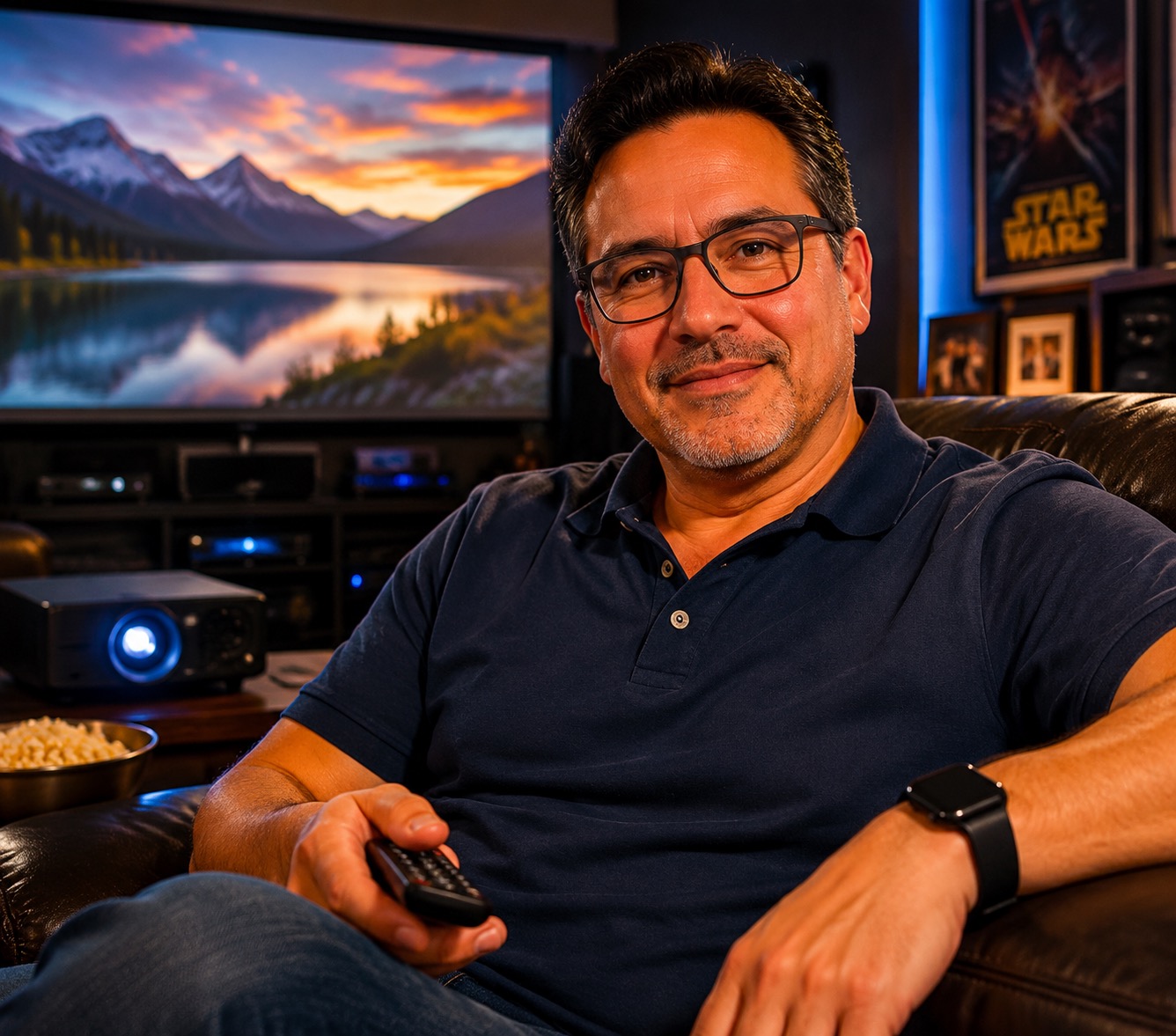
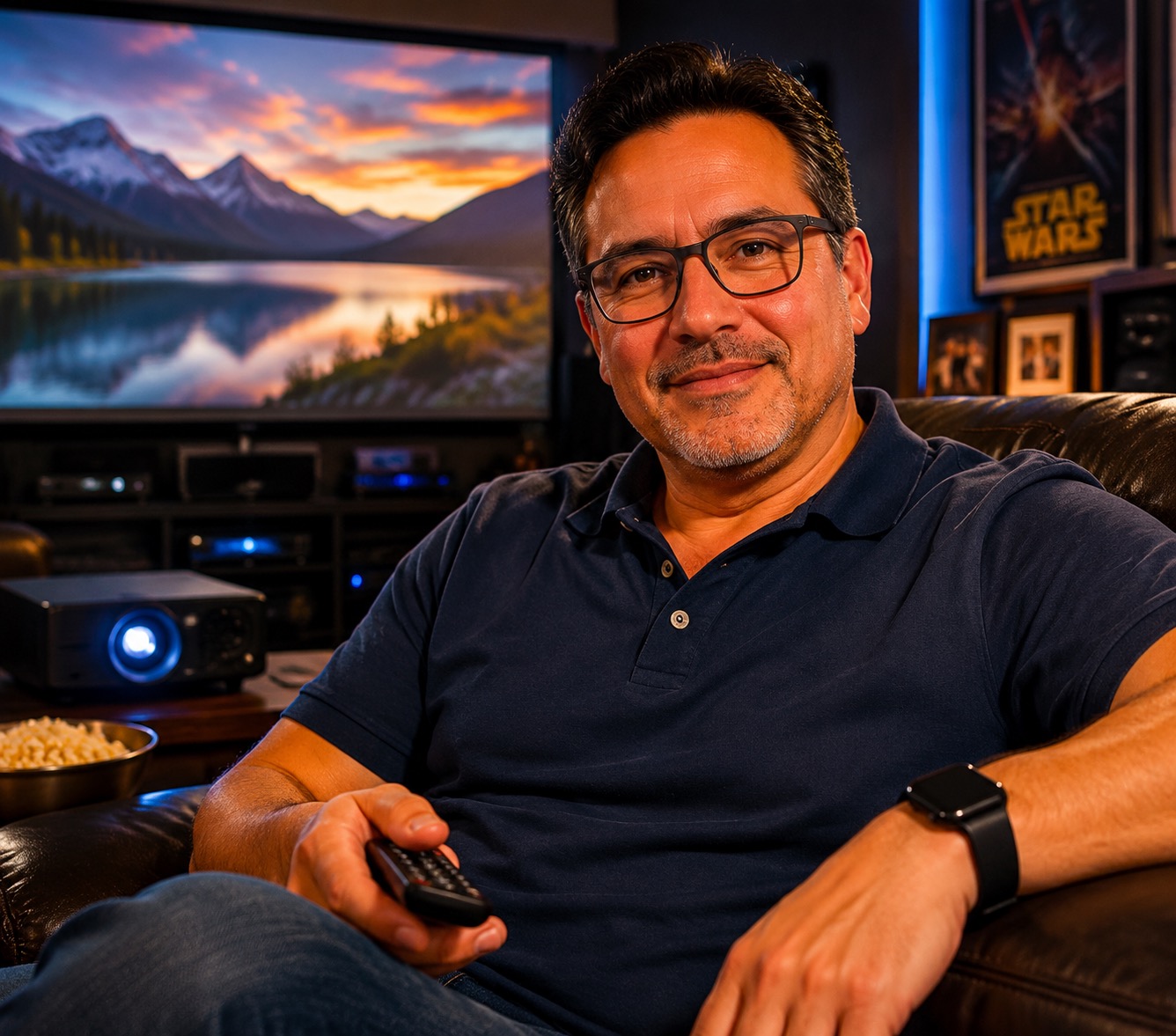
Choose the Valerion Fresnel ALR if your projector is a standard long-throw unit — ceiling mounted or shelf mounted at roughly viewer height — and you want to use the screen in a room with some ambient light rather than a fully darkened space. The 1.8 gain genuinely helps lower-brightness projectors deliver a watchable image in partial-light conditions. Owner reports consistently note a visible improvement over matte white in mixed-light living rooms. This is the screen that aligns most closely with the Silver Ticket STR-169120 ALR I run in my own room — different brand, same Fresnel-ALR operating principle.
Choose the Elite Aeon CineGrey 3D if you want standard-throw ALR compatibility plus active 3D support, and your projector supports active 3D output. The dual-layer construction sets it apart from basic matte ALR surfaces.
Choose the Deco Gear 49-inch ultrawide if you have no projector and want a high-refresh ultrawide VA monitor for PC gaming or productivity. The 3840×1080 resolution at 144Hz is a strong spec sheet for a curved ultrawide. It solves a different problem from the projection screens — it belongs in a different comparison.
Top Picks
AWOL VISION C100
The AWOL VISION C100 is a 100-inch CLR fixed-frame screen designed specifically for ultra-short-throw projectors. CLR (ceiling light rejecting) material uses a micro-ridged surface structure that absorbs overhead ambient light while allowing the low-angle light from a UST projector to reflect toward the viewer. Gain is approximately 0.6 — that attenuation is the cost of ambient light rejection, and your UST projector needs to be rated for the room size to compensate.
The C100 supports active 3D, which is unusual at this screen size and price band. Owner reports note accurate color rendering without the color casting that plagues cheaper ALR materials, particularly in cooler white tones. Frame construction is fixed — there is no motorized or pull-down option here.
Positioning matters critically. The projector must sit on a surface directly in front of and below the screen, within the UST throw window — typically one to three feet from the screen base. Any projector that requires ceiling mounting is incompatible with this screen. Verify your projector’s throw distance specification before purchasing.
Check current price on Amazon.
Deco Gear White 49 Inch Curved Monitor
The Deco Gear 49-inch ultrawide is a 3840×1080 curved VA panel — a monitor, not a projector screen. The R1500 curvature radius wraps the ultrawide format around the viewer’s field of view, which benefits single-viewer desktop setups. VA panel technology delivers a native contrast ratio of 3000:1, which produces deeper blacks than IPS at the cost of slightly narrower off-axis performance. The 144Hz refresh rate and E-LED backlight serve PC gaming and productivity work well.
There is no concept of gain, throw distance, or ambient light rejection here — those are projector screen metrics. The Deco Gear competes with other ultrawide monitors, not with projection surfaces. For buyers who arrived here asking “ALR vs white screen” in the context of projection, this product does not answer that question. For buyers who want a large-format display without a projector, the ultrawide VA panel is worth evaluating on its own terms.
Check current price on Amazon.
Valerion 100-inch Fresnel ALR
The Valerion Fresnel ALR is built for standard long-throw projectors — the category that covers most ceiling-mounted home theater setups and shelf-mounted budget projectors. The Fresnel lenticular structure collimates projector light toward the viewer while redirecting ambient light from ceiling fixtures and side windows away from the viewing axis. Gain is rated at 1.8, which is high for an ALR surface and genuinely useful for projectors in the 2,000, 3,500 lumen range.
The 85 percent ambient light rejection specification covers both ceiling and side light sources. Owner consensus on AVS Forum notes that the image quality improvement over basic matte white in living-room conditions is significant and not marginal. The viewing cone is narrower than matte white — off-axis viewers beyond roughly 30 degrees from center will notice image rolloff. For single-row seating in a moderately lit room, the Valerion’s gain-plus-rejection combination is the strongest spec pairing in this group.
Positioning note: Fresnel ALR requires the projector to be at or near viewer height for optimal reflection geometry. Ceiling-mounted projectors angled steeply downward may not align with the Fresnel structure’s designed input angle — verify your projector’s throw geometry before purchasing.
Check current price on Amazon.
Elite Screens Aeon CLR3 123”
At 123 inches diagonal, the Elite Screens Aeon CLR3 is the largest screen in this group and one of the largest fixed-frame UST ALR screens available at this price band. The CLR3 designation reflects Elite’s third-generation ceiling light rejecting material, which targets 90 percent rejection of overhead ambient light. Gain sits around 0.6, consistent with CLR physics — the structured surface that rejects ceiling light attenuates projector output, and a high-lumen UST projector is necessary to drive a 123-inch image to watchable brightness.
The edge-free fixed frame is Elite’s Aeon series construction: the screen surface runs to the frame edge without a visible border, which keeps the image immersive at large diagonal sizes. This is a UST-only screen. The CLR material structure requires projector placement at the screen base — a long-throw projector aimed at this screen from eight to twelve feet back will not produce a correctly rendered image. Verify room depth and wall width at 123 inches before ordering; at 16:9, that diagonal requires approximately 107 inches of horizontal wall space.
Check current price on Amazon.
Elite Screens Aeon CineGrey 3D
The Elite Screens Aeon CineGrey 3D is a 100-inch fixed-frame CLR/ALR screen that differs from the other UST-focused options in one significant way: it’s designed for standard-throw projectors rather than ultra-short-throw units. The dual-layer construction rejects ceiling and ambient light while accepting light from a projector positioned at conventional throw distances. It also supports active 3D — a specification that requires a compatible 3D projector and active-shutter glasses, but distinguishes this screen from the CLR-only UST surfaces in the group.
Gain is approximately 1.0 — neutral gain, meaning the screen neither amplifies nor attenuates projector output beyond its ambient light management function. Owner reports note that the CineGrey material handles skin tones and shadow detail well without the color casting that appears in lower-cost ALR materials. The edge-free Aeon frame construction matches the CLR3, with the screen surface running flush to the frame. For buyers with a ceiling-mounted standard-throw projector who also want ALR performance, this is the screen in this group that actually supports that configuration.
Check current price on Amazon.
Buying Guide
ALR vs CLR: Understanding What Each Technology Actually Does
ALR (ambient light rejecting) is the broad category. CLR (ceiling light rejecting) is a specific subcategory of ALR optimized for light arriving from above. Standard ALR screens, including Fresnel designs, manage ambient light from multiple directions. CLR screens prioritize overhead light rejection using a micro-structured surface that works precisely because a UST projector sends light from below. Knowing which type fits your setup begins with identifying your projector’s throw ratio and placement position — not its brand or brightness spec.
The full range of screen technologies available for different room configurations is covered in the Screens & Displays hub, including roll-down and motorized options outside this fixed-frame comparison.
Throw Distance and Projector Compatibility
The single most common purchasing mistake with ALR screens is selecting a screen without verifying projector throw compatibility. UST CLR screens — the AWOL C100, the Elite CLR3 — physically require the projector within roughly one to three feet of the screen base. Standard long-throw projectors operating at eight to fourteen feet need a Fresnel ALR or standard ALR surface designed for that geometry.
Check your projector’s throw ratio specification. A 0.25:1 throw ratio indicates a UST unit. A 1.2:1, 1.6:1 ratio indicates a standard long-throw unit. These two categories need different screens — putting a long-throw projector in front of a CLR screen built for UST projection will produce a dim, poorly rejected image regardless of how much the projector costs.
Gain and Room Brightness
Screen gain affects perceived brightness but trades off against viewing angle. A 1.8-gain screen like the Valerion concentrates reflected light toward the viewer axis, which improves brightness for direct-view seating but reduces image quality for viewers seated far off-center. A 0.6-gain CLR screen attenuates brightness in exchange for aggressive ambient light rejection. Neutral gain around 1.0, as on the CineGrey 3D, is the baseline — what you see is what the projector delivers, distributed evenly across a wider viewing cone.
For a dedicated dark room, gain above 1.0 has limited value — any quality matte white surface performs well when ambient light is controlled. Gain and ALR technology pay their dividends in mixed-light environments: living rooms with window light, spaces where ceiling fixtures can’t be fully dimmed.
Viewing Angle and Seating Layout
Before selecting an ALR screen, map your seating layout relative to the screen. Fresnel ALR screens — and CLR screens at steep off-axis angles — narrow the viewing cone compared to matte white. For a single row of centered seating, the narrower cone rarely causes problems. For wide seating arrangements, a second row positioned well off-axis, or a room where viewers frequently sit at 45 degrees or more from center, a wider-cone material or matte white surface may outperform a high-gain ALR screen for the majority of viewers in the room.
The Monitor Question
A 49-inch VA monitor and a 100-inch projection screen occupy different product categories. If your question is about screen technology for a projector, the Deco Gear ultrawide does not belong in that comparison. If your question is about a large-format display for a desktop or PC gaming setup without a projector, the projection screens do not belong in that comparison. Clarifying the display source — projector or computer output — before researching screen options saves significant time.
Verdict
For UST projector owners with ambient light to manage, the Elite Screens Aeon CLR3 at 123 inches is the strongest case in this group for rooms where wall space allows. The AWOL C100 is the correct answer at 100 inches for the same UST use case. For standard long-throw projectors in mixed-light environments, the Valerion Fresnel ALR at 1.8 gain is the most useful tool — owner field reports consistently support the brightness improvement over basic matte white. The Elite Aeon CineGrey 3D is the right answer if standard-throw ALR plus active 3D support is the requirement.
The screen matters as much as the projector. Most people spend more time researching the projector because it feels like the principal purchase. The surface the image lands on shapes every frame — resolution, contrast, color accuracy — across the entire life of the setup. Getting that decision right first is worth more than an extra hundred lumens on the projector spec sheet.
More fixed-frame and motorized screen options for every throw geometry are available in the full projection screen category.
Frequently Asked Questions
What is the difference between ALR and CLR screens?
ALR (ambient light rejecting) describes any screen material engineered to reduce the impact of ambient light on image quality. CLR (ceiling light rejecting) is a specific subset of ALR that uses a micro-ridged surface structure to absorb light arriving from above — ceiling fixtures and skylights — while reflecting projector light from below. CLR screens require an ultra-short-throw projector positioned at the screen base. Standard ALR designs, including Fresnel surfaces, manage ambient light from multiple directions and work with conventional long-throw projectors.
Can I use a CLR screen with a ceiling-mounted projector?
No. CLR screens are designed around the physics of ultra-short-throw projection, where the projector sits within one to three feet of the screen base at near-horizontal angle. A ceiling-mounted long-throw projector sends light from above, which the CLR material’s ridged structure will partially absorb — the same mechanism that rejects ceiling ambient light will reject projector light arriving from the wrong angle. For ceiling-mounted setups, a Fresnel ALR screen like the Valerion or a standard ALR surface designed for conventional throw geometry is required.
Is the Valerion Fresnel ALR screen better than matte white for a living room setup?
Based on owner reports and field accounts from AVS Forum members running standard long-throw projectors in partially lit rooms, the answer is yes for single-row centered seating. The 1.8-gain Fresnel structure improves perceived brightness and manages overhead and side ambient light meaningfully compared to matte white. The trade-off is a narrower viewing cone — off-axis viewers beyond 30 degrees from center will notice image rolloff. For a darkened dedicated room, the advantage narrows considerably and matte white becomes competitive.
How does the Deco Gear 49-inch monitor compare to these projection screens?
It doesn’t — they serve different functions. The Deco Gear ultrawide is a 3840×1080 VA monitor that connects to a computer or console via HDMI or DisplayPort. Projection screens are passive reflective surfaces that work with a projector as the light source. Screen gain, throw distance, and ambient light rejection are projector-screen concepts with no equivalent in monitor selection.
Does screen size or screen technology matter more for image quality?
Technology match to room conditions matters more than size for image quality, though size governs perceived immersion. A correctly specified ALR screen in a mixed-light room will produce a visibly better image than an oversized matte white surface in the same conditions. Size becomes the primary variable once the technology decision — CLR for UST, Fresnel ALR for standard-throw in ambient light, matte white for dark rooms — is correctly made. Buying the largest screen without verifying throw compatibility and ambient light rejection needs is the most common and most expensive mistake in this category.
Where to Buy
AWOL VISION Ambient Light Rejecting (ALR) Projector Screen for Ultra Short Throw(UST) Projector, 100" Fixed Frame, 80% Picture Quality Improved, 95% Celling Light Rejecting(CLR), Active 3D - C100See AWOL VISION Ambient Light Rejecting (… on Amazon