Soundbar vs 5.1 Speakers: A Complete Comparison Guide

Affiliate disclosure: Some links on this page are affiliate links. If you buy through them we earn a small commission at no extra cost to you. Recommendations are research-driven; we don't claim personal use of every product reviewed. Product prices and availability are accurate as of the date published and are subject to change. Always check Amazon for current pricing before purchasing. Learn more.
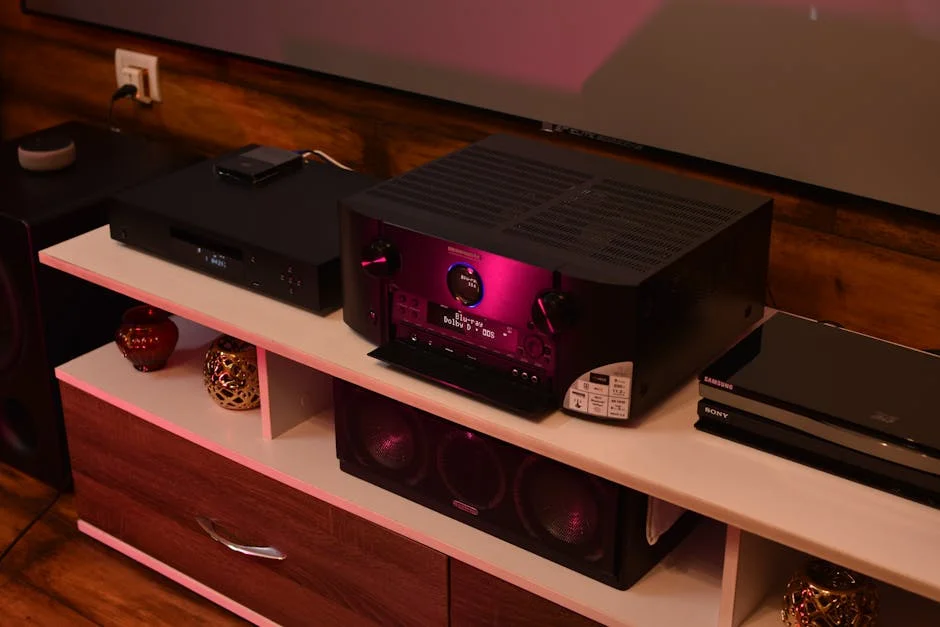
Choosing between a soundbar and a discrete 5.1 speaker system is the first real decision most buyers face when moving past a TV’s built-in audio. The wrong choice doesn’t just affect sound quality — it affects how much room you’re willing to dedicate to this, how many cables you’re prepared to manage, and what upgrade path stays open to you. A contextual overview of the broader speaker landscape helps set realistic expectations before comparing specific products.
All five products reviewed here claim 5.1 or better channel counts, but they arrive at that claim through very different engineering choices. Understanding those differences is more useful than reading marketing copy.
Side-by-Side
The five products in this comparison split into two distinct categories despite sharing similar channel descriptions. The Amazon Fire TV Soundbar Plus, Hisense HS5100, Samsung HW-Q65C, and VIZIO SL512X-08 are all soundbar-based systems — a single bar handles the front left, center, and front right channels from one enclosure, supplemented by a wireless subwoofer and, in some configurations, discrete rear satellites. The HiPulse N512 takes a different structural approach: it ships a wired subwoofer and four physical surround speakers alongside its main soundbar, positioning itself as a hybrid between traditional soundbar convenience and discrete speaker placement.
| | Amazon Fire TV Plus | HiPulse N512 | Hisense HS5100 | Samsung HW-Q65C | VIZIO SL512X-08 | |, |, |, |, |, |, | | Channel config | 5.1 | 5.1.2 | 5.1 | 5.1 | 5.1.2 | | Subwoofer | Wireless | Wired (5.25 in) | Wireless | Wireless | Wireless | | Surround speakers | Wireless | Wired (4x) | Wireless | Wireless | Wireless | | Dolby Atmos | Yes | Virtual | Yes | Yes | Yes | | HDMI ARC | Yes | Yes | Yes | Yes | Yes | | Optical | Yes | Yes | Yes | Yes | Yes | | Bluetooth | Yes | Yes | Yes (5.3) | Yes | Yes | | Q-Symphony | No | No | No | Yes | No | | Price band | Mid | Mid | Mid | Mid | Mid |
The channel count numbers look similar on paper. The physical reality is not.
Key Differences
How each system creates surround sound
Soundbars use two methods to create a sense of surround: discrete physical satellites placed at the listening position, or digital signal processing that bounces audio off walls and furniture to simulate rear presence. Every soundbar in this comparison uses DSP processing as the primary surround mechanism for the front soundstage. The rear satellites — where they exist — handle explicit rear-channel content, but the front three channels (left, center, right) always originate from the same enclosure.
The HiPulse N512 is the only product here that routes all four surround channels to physically separate speakers placed at the listener’s sides and rear. That distinction matters more in real rooms than spec sheets suggest. Wall reflections work reasonably well in rectangular, moderately damped rooms. Rooms with irregular geometry, heavy furniture, or significant acoustic treatment reduce the effectiveness of DSP-based surround substantially.
A discrete 5.1 system — whether built from separates or assembled as a matched set — produces explicit channel separation because each speaker occupies a unique position in space. The ear’s ability to localize sound sources is based on timing and level differences between ears. Physical speaker placement delivers that directly. Digital simulation approximates it.
Subwoofer integration
Wireless subwoofers in soundbar systems use proprietary 2.4 GHz or 5 GHz links to synchronize with the main bar. Latency on these links is typically low enough that the integration is inaudible in most environments. The practical advantage is placement flexibility — the sub can sit anywhere within the wireless range without running a cable across the room.
The HiPulse N512’s wired 5.25-inch subwoofer eliminates wireless latency as a variable entirely. The trade-off is a cable run from the main unit to wherever the sub sits. The 5.25-inch driver is a modest size for a dedicated subwoofer — adequate for moderate listening levels in smaller rooms, but not comparable in low-frequency extension to a standalone subwoofer like the SVS PB-1000 Pro, which uses a 10-inch driver in a ported enclosure.
Atmos: physical versus virtual
Dolby Atmos in a soundbar context relies heavily on upward-firing drivers or DSP virtualization to simulate height channels. The VIZIO SL512X-08 is described as a 5.1.2 system with Atmos, which implies height channel handling — whether through dedicated upward-firing drivers or upmixing from a 5.1 signal depends on the specific implementation. The HiPulse N512 lists “virtual surround sound” for its height claim, which is DSP-only. Physical height channels require speakers above the listening position, such as in-ceiling drivers or upward-firing modules angled at the ceiling.
The Klipsch CDT-3650-C II in-ceiling drivers used in my 14x18 room are the reference point for what genuine Atmos height channels sound like. A soundbar’s virtualized heights are not equivalent — they are an approximation that works better with certain program material (ambient scenes, overhead weather, aircraft) than others (discrete overhead effects that rely on precise localization).
Samsung Q-Symphony
The Samsung HW-Q65C supports Q-Symphony, which allows the soundbar’s drivers to work in concert with a compatible Samsung television’s built-in speakers rather than replacing them. This is a meaningful differentiator for buyers who own a compatible Samsung TV. For everyone else, it is not a relevant feature. Owner reports on AVS Forum suggest Q-Symphony delivers a noticeably wider soundstage in music and dialogue-heavy content on compatible Samsung panels.
Top Picks
Amazon Fire TV Soundbar Plus with subwoofer and surround sound speakers
The Fire TV Soundbar Plus integrates with Amazon’s ecosystem more deeply than most soundbars in this tier. For households already using Fire TV sticks, Echo devices, or Alexa routines, the setup friction is lower than with a generic soundbar — Alexa voice control extends to volume, input switching, and EQ presets without requiring a separate app. Owner reports consistently note that dialogue clarity is a standout characteristic, which aligns with the product name’s explicit “clear dialogue” positioning.
The included wireless subwoofer and surround satellites complete the 5.1 configuration out of the box. Verified buyers note that the surround sound effect is more convincing with the satellites placed correctly at the sides or rear of the listening position than with most soundbar-only systems. The wireless connection between components is reported as stable in typical living room distances.
The Dolby Atmos implementation is virtualized — there are no upward-firing drivers in this system. Height channel effects are produced by DSP. For buyers transitioning from a TV’s built-in speakers, the improvement is substantial. For buyers comparing against a discrete 5.1.2 system with physical height channels, the distinction is real and worth acknowledging.
Check current price on Amazon.
Wooden 5.1.2 Sound Bars, 4 Surround Speakers Wired, Virtual Surround Sound System (HiPulse N512)
The HiPulse N512 takes a structural approach that no other product in this comparison matches: four wired surround speakers that physically occupy the listening space rather than relying on DSP to simulate their presence. That matters. Owner reports from buyers who have set up the system with speakers at their intended positions — sides and rear — describe a surround effect that is more localized and convincing than typical soundbar-based systems at similar price bands.
The wired connection to surround channels is both the system’s primary advantage and its installation constraint. Running four speaker cables to listening position locations requires either surface cable management, in-wall routing, or accepting visible cable runs. For buyers in apartments, rental properties, or finished rooms without cable routing access, this is a non-trivial consideration.
The 5.25-inch wired subwoofer handles bass duties. Verified buyers in smaller rooms — living rooms under roughly 250 square feet — report satisfactory bass performance for movies and TV content. In larger rooms or for buyers who prioritize low-frequency extension, the driver size is a limiting factor. The “Virtual Surround Sound” label on height channels means the .2 designation is DSP-based, not physical in-ceiling or upward-firing.
Check current price on Amazon.
Hisense HS5100 5.1Ch Sound Bar with Wireless Subwoofer
Hisense’s HS5100 ships as a straightforward 5.1 soundbar system with 540W rated power, Bluetooth 5.3, and Roku TV Ready certification. The Roku TV Ready feature is a meaningful convenience for Roku TV owners — it allows the soundbar to appear in the Roku interface and be controlled with the Roku remote, eliminating the need for HDMI-CEC troubleshooting that plagues many soundbar-TV combinations.
DTS:X support alongside Dolby Digital Plus covers the two dominant object-based audio formats. Owner reviews note strong performance with DTS-encoded Blu-ray content, which is common on action and science fiction titles. The wireless subwoofer in this system receives consistent positive mentions for bass depth relative to the price band — verified buyers describe it as fuller-sounding than expected for a compact enclosure.
EzPlay is Hisense’s simplified connectivity feature, designed to reduce setup steps for users who want HDMI ARC operational without manual input selection. For buyers who struggle with soundbar-TV pairing, this has practical value. For buyers comfortable with ARC setup, it’s irrelevant. Audioholics has not published measurements on this unit; owner consensus from verified buyers is the primary evidence base here.
Check current price on Amazon.
Samsung 5.1 Channel Sound Bar with Wireless Subwoofer Q-Symphony & Dolby Atmos Audio — HW-Q65C/ZA (Renewed)
The HW-Q65C is a renewed unit — meaning it has been returned, inspected, and recertified. Renewed electronics carry lower median prices than new inventory, and Samsung Renewed products sold through Amazon’s certified renewed program include a 90-day warranty at minimum. For buyers who are price-conscious and comfortable with renewed inventory, this is a relevant product. For buyers who require new-in-box with full manufacturer warranty coverage, it is not.
The Q65C’s Q-Symphony integration is its clearest differentiator in this comparison. Compatible Samsung TVs (Q-series and higher from recent model years) can run the TV’s own speakers in sync with the soundbar, creating a wider and more enveloping front stage than the soundbar alone produces. Samsung’s AVS Forum owners consistently describe Q-Symphony as audibly meaningful on music content and wide-panning film mixes. On Samsung TVs that are not Q-Symphony compatible, the soundbar operates normally without the feature.
Dolby Atmos is present in this system through DSP virtualization and, depending on room reflections, upward-angled driver behavior. The system does not include discrete surround satellites in the box as configured — it is a soundbar-plus-wireless-subwoofer combination, making it a 3.1 physical footprint despite the 5.1 channel processing claim. Buyers expecting physical surround speakers at the listening position should note this.
Check current price on Amazon.
VIZIO 5.1.2 Elevate SE Soundbar
The VIZIO SL512X-08 is the only product in this comparison that explicitly positions height channel handling as part of its physical design. The 5.1.2 configuration — rather than a virtual upmix claim — implies dedicated driver placement for height content. Owner reports describe the Atmos overhead effects as more convincing than typical soundbar Atmos implementations, particularly on content with discrete overhead sound design.
The wireless subwoofer performs consistently in owner reviews, with multiple verified buyers noting that bass response in rooms up to roughly 300 square feet is well-integrated with the main bar. QuickFit compatibility allows the soundbar to mount directly beneath a compatible VIZIO TV without additional hardware — a minor convenience for wall-mounted setups that eliminates a separate mounting bracket.
DTS:X and Dolby Atmos together cover the major object-based audio formats on streaming and physical media. Bluetooth connectivity is present for two-channel music playback. Owner consensus on AVS Forum notes that the VIZIO system performs best when the main bar is positioned within the TV manufacturer’s recommended throw angles, since the height driver effectiveness depends on ceiling geometry and the bar’s distance from the ceiling. Low-ceiling rooms — under roughly eight feet — may see inconsistent height channel performance.
Check current price on Amazon.
Buying Guide
What the channel count actually tells you
A “5.1” label on a soundbar does not mean five physically separate speakers. It means the system processes five channels of audio: front left, center, front right, surround left, and surround right — plus one subwoofer (the “.1”). How those five channels reach your ears depends on the system’s architecture. A soundbar collapses the three front channels into one enclosure. A discrete system places each channel at a unique point in space.
The HiPulse N512 is the only product here that physically separates all four surround channels from the main bar. Every other system in this comparison handles front three channels from a single enclosure. That is the architectural difference the channel count label obscures.
Sensitivity and amplifier power
Sensitivity matters in home theater more than in two-channel stereo because AV receivers share finite power across many channels simultaneously. A speaker that requires more amplifier power to reach reference listening level draws more from a shared amplifier pool. Klipsch’s high-sensitivity designs — the RP-600M fronts in my own system measure around 96 dB/2.83V/1m — reach reference level with far less power than lower-sensitivity alternatives.
Soundbar systems in this comparison are self-amplified, so the sensitivity question applies differently — the amplifier and driver are matched by the manufacturer. For buyers considering a future upgrade to separates, understanding sensitivity before purchasing surrounds will save re-purchasing a less efficient set. A good overview of the full speaker category range helps calibrate where any of these systems sit on the broader spectrum.
Room size and acoustic environment
The effectiveness of DSP-based surround virtualization is meaningfully affected by room geometry and acoustic treatment. Hard, parallel walls with reflective surfaces favor soundbar virtualization. Heavily treated rooms — bass traps, broadband absorption at reflection points — reduce the wall reflections that virtual surround depends on. Irregularly shaped rooms with openings, alcoves, or open floor plans reduce DSP surround coherence further.
The HiPulse N512’s wired physical surround placement is less affected by room acoustics than DSP-based alternatives because the surround signal arrives directly at the ear from the speaker’s physical position. In treated or non-rectangular rooms, that advantage becomes more pronounced.
Ecosystem and connectivity
The Amazon Fire TV Soundbar Plus performs best in Amazon-ecosystem households. The Hisense HS5100 delivers the most friction-free experience for Roku TV owners. The Samsung HW-Q65C is most valuable to buyers with a compatible Samsung Q-series or higher TV where Q-Symphony activates. The VIZIO SL512X-08 and HiPulse N512 are more TV-agnostic and rely on standard HDMI ARC, optical, and Bluetooth connectivity that works with any source.
Verify ARC compatibility before purchasing any soundbar. Some older TV models support ARC but not eARC, which limits bandwidth for lossless Dolby TrueHD and DTS-HD Master Audio passthrough. If lossless audio from 4K Blu-ray is a priority, eARC on both the TV and the soundbar is required.
When a discrete 5.1 system makes more sense
Buyers who are willing to manage speaker cable runs, have flexibility in room arrangement, and want genuine channel separation at every listening position should give serious weight to a discrete 5.1 setup built from separates — a receiver plus matched speakers. The products in this comparison represent the all-in-one end of the spectrum, with the HiPulse N512 being the closest hybrid. A proper discrete system — even an entry-level AVR with budget bookshelf speakers and a standalone sub — produces surround channel separation that no soundbar matches on a purely physical basis.
Frequently Asked Questions
Does a soundbar actually produce real 5.1 surround sound?
A soundbar with satellite speakers produces explicit rear-channel surround from the satellite’s physical position, but the front three channels still originate from a single enclosure. A true 5.1 system places each speaker independently. The difference is audible in critical listening but less meaningful for casual TV watching. The HiPulse N512 comes closest to discrete surround in this comparison because it physically separates all four surround channels.
Is the Amazon Fire TV Soundbar Plus worth it if I don’t use Fire TV?
The Fire TV integration provides the most value to households already using Amazon’s ecosystem — Fire TV sticks, Echo devices, Alexa routines. For buyers using other smart TV platforms like Roku, Google TV, or Apple TV, the Hisense HS5100 or VIZIO SL512X-08 offer comparable audio performance without ecosystem lock-in. The Fire TV Plus is still capable on non-Amazon TVs via HDMI ARC — the ecosystem features are additive, not required.
What does “renewed” mean for the Samsung HW-Q65C, and should I avoid it?
Renewed means the unit was returned, inspected, and recertified to meet manufacturer specifications. Amazon’s Certified Renewed program includes a 90-day minimum warranty. The risk versus a new unit is primarily cosmetic wear and the possibility of a shorter total lifespan — renewed electronics have had prior use. For buyers who are comfortable with that trade-off, the Samsung HW-Q65C offers Q-Symphony capability at a lower cost than new inventory.
Does Dolby Atmos on a soundbar sound like Atmos on a dedicated speaker system?
No. Atmos on a soundbar uses DSP virtualization or upward-firing drivers angled at the ceiling to simulate height channels. Physical in-ceiling speakers or upward-firing Atmos modules placed at the correct height and angle produce more precisely localized overhead effects. The VIZIO SL512X-08 is the strongest performer in this comparison for Atmos based on owner reports, but it still does not replicate what dedicated in-ceiling drivers at the correct height position deliver.
How important is HDMI eARC versus standard ARC for these systems?
Standard ARC handles compressed Dolby Digital and DTS audio, which covers all streaming content and most broadcast. eARC is required for lossless Dolby TrueHD and DTS-HD Master Audio passthrough from a 4K Blu-ray player. If physical media with lossless audio tracks is part of your setup, verify that both your TV and soundbar support eARC — not just ARC. Most soundbars in this comparison support eARC; confirm your TV does as well before purchasing.
Where to Buy
Amazon Fire TV Soundbar Plus with subwoofer and surround sound speakers (newest model), 5.1 channel, Dolby Atmos, clear dialogueSee Amazon Fire TV Soundbar Plus with sub… on Amazon