Denon X1800H vs X3800H: Full Comparison Guide

Affiliate disclosure: Some links on this page are affiliate links. If you buy through them we earn a small commission at no extra cost to you. Recommendations are research-driven; we don't claim personal use of every product reviewed. Product prices and availability are accurate as of the date published and are subject to change. Always check Amazon for current pricing before purchasing. Learn more.

The Denon AVR-X1800H and AVR-X3800H sit at opposite ends of Denon’s current mid-tier lineup, and the decision between them is rarely as simple as “buy the cheaper one.” Channel count, Audyssey calibration tier, and HDMI 2.1 port allocation differ in ways that matter depending on your room, your speaker layout, and whether you plan to grow the system. This comparison covers all five current Denon receivers in that range — the X1700H, X1800H, S970H, X3800H, and a certified-renewed X1700H — so the right fit is clear before you buy.
The core question is whether your room and speaker layout can use what the upper-tier receivers offer. A 7.2-channel receiver in a 5.1 room is fine; a 9.4-channel receiver in that same room is overkill. The AV Receivers hub has the broader context on layout planning — this article focuses on where these five units actually differ.

Side-by-Side
The five receivers here span two distinct tiers within Denon’s lineup. The X1700H and X1800H are entry-level X-series units, both rated at 80W × 7 and both limited to 7.2-channel configurations. The S970H sits in the S-series at 90W × 7 with 7.2 channels. The X3800H is the step-up unit at 105W × 9 with 9.4-channel capability and meaningfully better calibration hardware.
The Audyssey tier is the sharpest dividing line. The X1700H and X1800H include standard MultEQ. The S970H moves to MultEQ XT. The X3800H includes MultEQ XT32 — the same version Adrian runs in his own room with REW and a UMIK-1. That difference is not a minor spec-sheet distinction. MultEQ XT32 processes room correction at 32-band precision versus 8 bands on standard MultEQ, and the audible difference in a treated room is real.
HDMI 2.1 port allocation also splits the field. The X1800H provides one HDMI 2.1 port with 4K/120Hz passthrough and eARC on the HDMI 1 output. The X3800H provides four HDMI 2.1 inputs plus two HDMI 2.1 outputs, covering PlayStation 5, Xbox, and PC 4K/120Hz sources simultaneously. For a gaming-first setup with multiple 4K/120Hz devices, the X3800H’s port count is a practical ceiling issue, not a luxury.
Auro-3D support exists only on the X3800H. IMAX Enhanced certification is also X3800H-exclusive in this group. Both are niche formats — Auro-3D disc releases are limited — but if either matters to your content library, the X3800H is the only option here.
Key Differences
Audyssey Calibration Tier
Standard MultEQ on the X1700H and X1800H applies 8-band correction per channel. That’s sufficient for a relatively flat room with no severe modal problems. In a room with bass nodes, flutter echo, or early reflections from parallel walls, 8 bands does not give the correction algorithm enough resolution to address the problems cleanly.
MultEQ XT32 on the X3800H works at 32 bands per channel. More bands means finer correction, which matters most in the bass region where room modes are slowest to resolve. Owner reports on AVS Forum consistently show MultEQ XT32 outperforming standard MultEQ in rooms with meaningful acoustic problems — and most untreated rooms have meaningful acoustic problems.
The strong opinion here is direct: Audyssey MultEQ XT32 is a legitimate calibration tool when run correctly. That means using the provided microphone, measuring from at least five positions covering the primary listening area, and verifying the result in REW afterward. Run carelessly — single measurement position, microphone at ear height without checking for reflections — it produces mediocre results regardless of the processing tier. The hardware gives you the resolution; the process determines whether you use it.
Channel Count and Layout Ceiling
The X1700H, X1800H, and S970H are all 7.2-channel receivers. A 7.2 configuration supports front left/right, center, surround left/right, and one pair of either back surrounds or height channels — not both simultaneously. Dolby Atmos in a 5.1.2 layout (five speakers plus two ceiling or up-firing height channels) is the practical ceiling for these units.
The X3800H at 9.4 channels supports 7.1.2 or 5.1.4 layouts without an external amplifier. A 5.1.4 configuration with four height channels is meaningfully different from 5.1.2 in content that uses all four Atmos object layers — large-room Atmos mixes with overhead movement benefit from it. A 7.1.2 layout adds rear surrounds for improved immersion in non-Atmos content as well. For a room already wired for nine speakers, the X3800H is the only receiver in this group that uses all of them.
HDMI 2.1 Port Allocation
One HDMI 2.1 port on the X1800H is sufficient for a single 4K/120Hz source — a PlayStation 5 or a single gaming PC. Two 4K/120Hz sources require either a switching solution or a move up the line. The X3800H’s four 2.1 inputs eliminate that constraint entirely.
For a home theater that primarily runs a 4K Blu-ray player, an Apple TV 4K, and one gaming console, the X1800H’s single 2.1 port may be adequate since Apple TV 4K and Blu-ray players don’t require 4K/120Hz passthrough. The math changes with two gaming consoles or a PC plus console setup.
Power Rating and Amplifier Section
The 80W-per-channel rating on the X1700H and X1800H (at 8 ohms, 20Hz, 20kHz, 0.08% THD) is honest mid-tier power — adequate for Klipsch RP-series speakers in a medium room, which are 98dB efficient and easy to drive. It becomes limiting with 4-ohm loads or lower-sensitivity speakers in a larger room.
The X3800H’s 105W × 9 rating matters less for efficiency-sensitive speakers and more for headroom. Headroom is the difference between an amplifier that clips on dynamic peaks and one that doesn’t — and clipping on dynamic film content is audible as harshness. Owner consensus on AVS Forum and Audioholics forum threads supports the X3800H having a more composed amplifier section under dynamic load than the entry-level X-series units.
Who Should Buy Which
The X1700H and its certified-renewed counterpart are the right answer for a first-time buyer building a 5.1 or 5.1.2 system with efficient speakers and one or zero 4K/120Hz gaming sources. If budget is the primary constraint, these units deliver Dolby Atmos, DTS:X, and functional room correction at the lowest entry point in this group. The best entry-tier AV receivers guide covers this tier more thoroughly if that’s the constraint.
The X1800H is a modest step up from the X1700H — same channel count and power, but with refinements to the HDMI implementation and UI. For buyers who want current-generation 8K HDMI passthrough on a 7.2-channel system and don’t need the S-series feature set, it’s a reasonable choice.
The S970H occupies an interesting position. It’s an S-series unit, meaning it sits outside the X-series calibration ladder, but it steps up to MultEQ XT (not XT32) and adds gaming-focused features — Variable Refresh Rate support, Auto Low Latency Mode, and 4K/120Hz on multiple inputs. For a gaming-primary room with a 7.2 layout, the S970H’s HDMI feature set is stronger than the X1800H’s. For a theater-primary room where calibration quality matters most, the X3800H is the better long-term investment.
The X3800H is the right receiver for a room with nine speaker positions, two subwoofer outputs, multiple 4K/120Hz gaming sources, and a buyer who intends to run calibration correctly. It’s also the right answer for anyone already in the best mid-tier AV receivers range who is deciding whether to stretch further — the calibration tier upgrade alone justifies the difference for a dedicated room.
Buying Guide
Matching Channel Count to Your Room
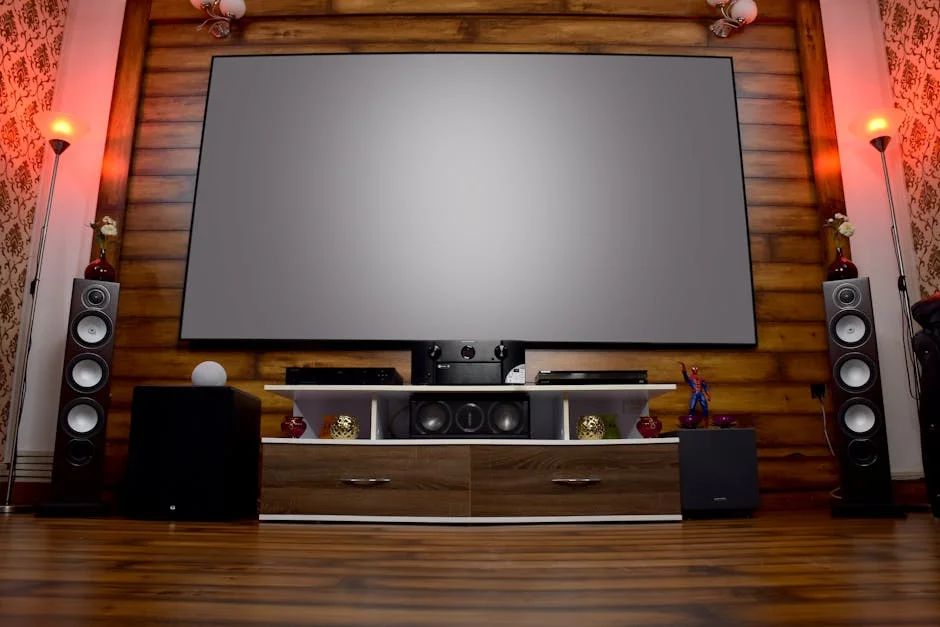
Buy for the speaker layout you have or are committing to wire, not the layout you might want eventually. Running a 9.4-channel receiver in a 5.1 room means paying for amplifier channels that are inactive. Running a 7.2-channel receiver in a room already wired for nine positions means buying again. Before selecting a receiver, confirm your physical speaker count and whether your room has ceiling access for height channels.
A 5.1.2 Atmos layout — five floor-level speakers, one subwoofer, two height channels — is the practical minimum for Atmos. A 7.1.2 or 5.1.4 layout produces meaningfully better Atmos object tracking overhead. If you’re wiring new construction or a dedicated room, wiring for four height channels costs little at the rough-in stage and avoids a receiver upgrade later.
Understanding Audyssey Tiers Before You Buy
Standard MultEQ (X1700H, X1800H) applies room correction at 8 bands per channel. MultEQ XT (S970H) increases this to 16 bands. MultEQ XT32 (X3800H) works at 32 bands. The practical difference appears most clearly in the bass region, where room modes are broadest and require the most correction resolution to address without over-smoothing adjacent frequencies.
For a well-treated room with GIK or similar panels at first reflection points and corner bass traps, standard MultEQ performs acceptably. For an untreated or lightly treated room — which describes most living rooms and many dedicated rooms — XT32’s resolution advantage compounds. The AV Receivers hub includes a calibration workflow overview worth reading before running any version of Audyssey for the first time.
HDMI 2.1 Port Planning
Count your current and near-future 4K/120Hz sources before selecting a receiver. A PlayStation 5 requires one HDMI 2.1 port. An Xbox Series X requires another. A gaming PC at 4K/120Hz requires a third. A 4K Blu-ray player and streaming box like Apple TV 4K operate at 4K/60Hz and do not require HDMI 2.1.
The X1800H’s single HDMI 2.1 port is the binding constraint for multi-console or console-plus-PC setups. The X3800H’s four 2.1 inputs remove that constraint. HDMI switches that downgrade to HDMI 2.0 exist but introduce latency and variable compatibility issues — buying the receiver with adequate native 2.1 ports is the cleaner solution.
Subwoofer Output Count
All five receivers in this group support dual subwoofer outputs, but the implementation differs. Dual sub outputs allow independent bass management for two physical subwoofers — critical for addressing bass nodes in a rectangular room that a single sub cannot solve. Running dual subs with proper placement (often asymmetric, based on REW measurements) is one of the highest-impact improvements available to a dedicated room.
For a single-subwoofer setup, dual outputs provide no practical benefit. For a two-subwoofer setup, confirm the receiver’s dual-sub implementation before assuming it’s equivalent to discrete bass management. The X3800H’s 9.4-channel designation specifically counts the second subwoofer output as one of the four pre-amp channels.
New vs. Certified Renewed
The certified-renewed X1700H represents Denon factory-refurbished stock with a warranty. For buyers in the best entry-tier AV receivers range, certified-renewed Denon units have a consistent track record in the AVS Forum ownership community — the failure modes are known, and Denon’s refurbishment process addresses the common ones. The tradeoff is no guaranteed cosmetic condition and a shorter warranty window than new. For a rack installation where cosmetics are hidden, it’s a practical choice.
Verdict
The X3800H is the stronger receiver for a dedicated room with nine speaker positions, multiple gaming sources, and a buyer willing to run Audyssey XT32 correctly. Its calibration tier, channel count, and HDMI 2.1 allocation address the three primary constraints that force a mid-tier receiver upgrade.
The X1800H is the right answer for a 7.2 system with one or two 4K/120Hz sources where budget is a real constraint. It is not the wrong choice — it is the right choice for a specific, smaller use case.
The S970H earns consideration for gaming-primary buyers who want better HDMI 2.1 coverage than the X1800H at a lower cost than the X3800H. The MultEQ XT tier sits between the two on calibration quality. For a hybrid gaming-and-theater room at 7.2 channels, it’s a reasonable middle point.
The X1700H — new or renewed — is the entry point. It does less than the others but covers the fundamentals at the lowest cost. For the best mid-tier AV receivers buyer deciding where to draw the line, the X1700H sets the floor and the X3800H sets the ceiling of what this Denon family offers.
Frequently Asked Questions
What is the difference between Audyssey MultEQ and MultEQ XT32?
MultEQ is the base version of Denon’s room correction software, operating at 8 bands of correction per channel. MultEQ XT32 — found on the X3800H — processes at 32 bands, giving it significantly more resolution to address bass modes and frequency irregularities. The difference is most audible in rooms with untreated parallel walls or concrete/hardwood floors. MultEQ XT32 run correctly, with multiple measurement positions and REW verification, produces measurably flatter in-room response than standard MultEQ.
Can the AVR-X1800H support a 7.1.2 Atmos layout?
No. The Denon AVR-X1800H is a 7.2-channel receiver, meaning it drives seven speaker channels simultaneously. A 7.1.2 layout — seven floor-level speakers plus two height channels — requires nine amplifier channels. Achieving 7.1.2 with the X1800H would require an external amplifier for the two additional channels.
Is the certified-renewed X1700H a reliable option?
Certified-renewed Denon units sold through Amazon’s renewed program are factory-refurbished with a satisfaction guarantee. AVS Forum ownership reports on renewed Denon receivers are generally positive, with failure rates comparable to new units. The practical risks are cosmetic condition variability and a shorter warranty than new. For a rack installation where the unit isn’t visible, the renewed Denon AVR-X1700H is a sound choice at the entry-tier price point.
Does the AVR-S970H support 4K/120Hz on multiple inputs?
Yes. The S970H is built around gaming features and includes multiple HDMI 2.1 inputs supporting 4K/120Hz passthrough, along with Variable Refresh Rate and Auto Low Latency Mode. This makes it meaningfully better than the X1800H for multi-console setups. The tradeoff is the S-series Audyssey tier — MultEQ XT rather than XT32 — which matters for buyers prioritizing calibration quality in a dedicated listening room.
Should I buy the X1800H or stretch to the X3800H for a dedicated home theater room?
For a dedicated room with ceiling speaker wiring and two or more subwoofers, the Denon AVR-X3800H is the stronger long-term choice. MultEQ XT32 alone justifies the upgrade if you’re committed to proper calibration — and a dedicated room built for critical listening benefits most from 32-band correction. The X1800H is sensible for a 7.2 system in a living room; for a room you’re investing in acoustically, the X3800H’s ceiling is higher in every measurable way. The best mid-range AV receivers guide covers the full competitive context at that price tier.

Where to Buy
Denon AVR-X3800H 9.4-Ch 8K UHD AVR Home Theater Stereo Receiver, (105W X 9) Built-in Bluetooth Wi-Fi & HEOS Multi-Room Streaming Dolby Atmos DTS:X IMAX Enhanced & Auro 3DSee Denon AVR-X3800H 9.4-Ch 8K UHD AVR Ho… on Amazon